Wildlife Problem? We Can Help.
Humane, professional nuisance wildlife consulting in Southwest Louisiana.

Big Mamou Enterprises
Wild Blue Indigo – Baptisia australis | Louisiana Heritage Perennial
Wild Blue Indigo – Baptisia australis | Louisiana Heritage Perennial
Couldn't load pickup availability
Share
A Living Heirloom for the Louisiana Prairie Garden
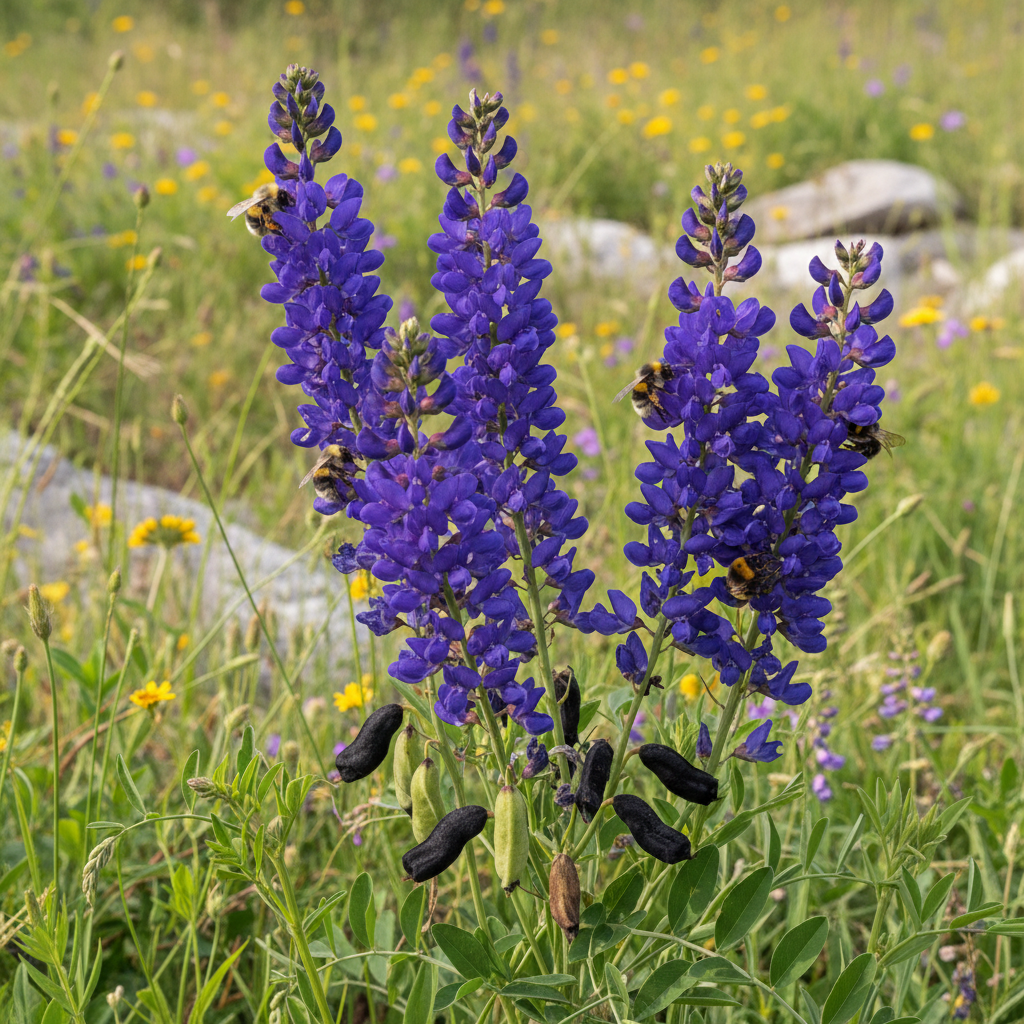
Wild Blue Indigo is one of the most breathtaking natives you can grow on the Louisiana Cajun prairie — and one of the most historically rich. Each spring, this deep-rooted perennial sends up tall spikes of brilliant indigo-blue flowers that look like they belong in a painting. Cherokee and other southeastern nations used the roots medicinally and extracted a blue dye from the stems, while early European settlers adopted it as a substitute for true indigo (Indigofera), earning it a firm place in the Southern heritage garden tradition.
What makes Baptisia truly exceptional is its longevity and ecological value. Once established in well-drained soil, a single plant can live 50 years or more — making it a genuine multigenerational garden investment. Its deep taproot fixes nitrogen, improving soil for neighboring plants. In late summer, the inflated seed pods dry to a rich charcoal black and rattle in the breeze, adding winter interest and making stunning dried arrangements. Bumblebees are its primary pollinators and absolutely swarm the blooms in spring.
🌿 Growing Notes (Zone 9A — Lake Charles, LA)
- Sun: Full sun — essential for best blooming and compact growth
- Soil: Well-drained; tolerates poor, sandy, or clay soils once established
- Water: Drought-tolerant once established; do not overwater
- Mature size: 3–4 ft tall and wide; forms an impressive clump over time
- Growth rate: Slow first year ("sleep, creep, leap"); spectacular by Year 3
- Wildlife value: Critical early-season pollen source for native bumblebees; host plant for Wild Indigo Duskywing and Hoary Edge skippers
❓ Frequently Asked Question
Why is Wild Blue Indigo slow to establish, and when will it bloom?
Baptisia follows the classic native perennial pattern: "sleep, creep, leap." Year 1 it puts almost all energy into developing a deep taproot and may look unimpressive. Year 2 it grows noticeably. Year 3 and beyond it blooms spectacularly and begins expanding into a full clump. Do not move or divide it — the taproot resents disturbance. Plant it where you want it permanently and let it build. The 50-year payoff is worth the patience.
⚠️ Disclaimer: Plant descriptions are for horticultural and educational purposes only. Consult a qualified herbalist or healthcare provider before any medicinal use.