Wildlife Problem? We Can Help.
Humane, professional nuisance wildlife consulting in Southwest Louisiana.

Big Mamou Enterprises
Trumpet Creeper (Campsis radicans) — Native Louisiana Hummingbird Vine
Trumpet Creeper (Campsis radicans) — Native Louisiana Hummingbird Vine
Couldn't load pickup availability
Share
English · Trumpet Creeper
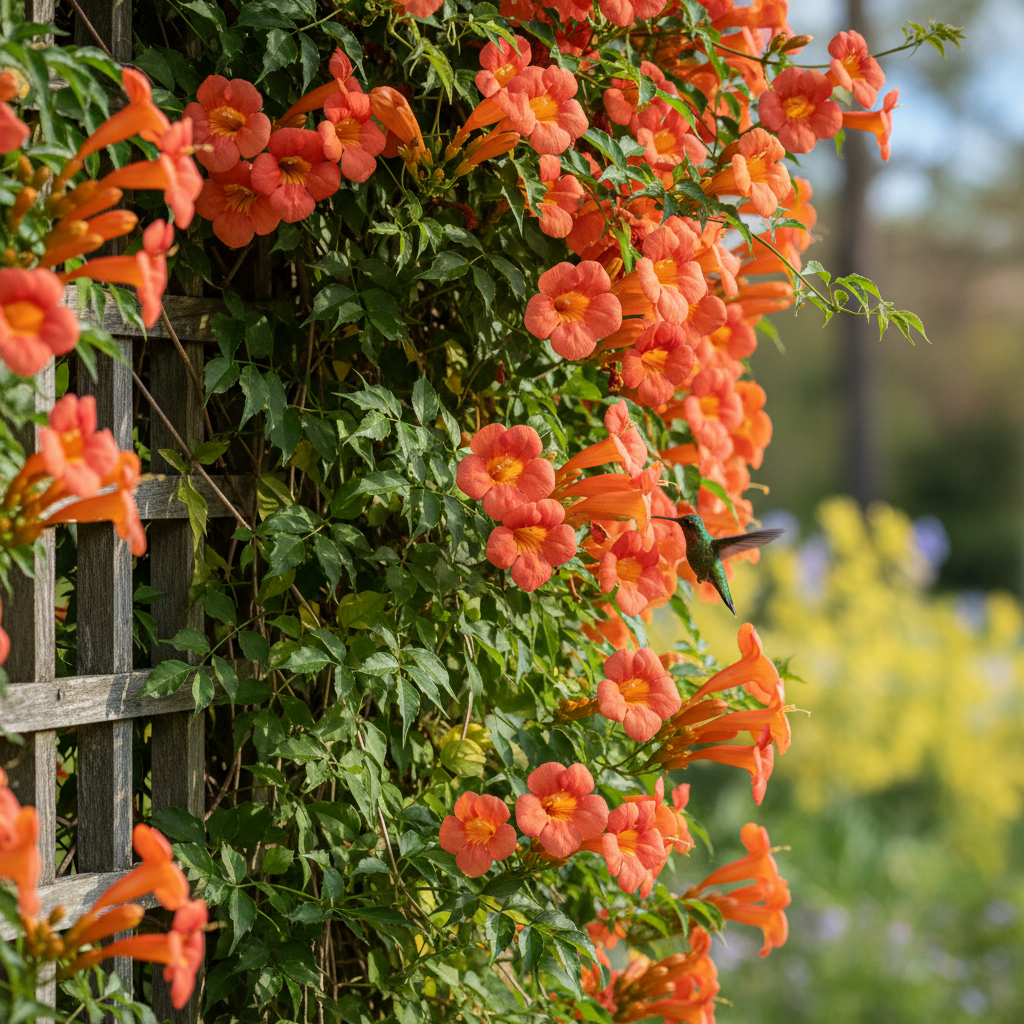
Trumpet Creeper (Campsis radicans) is a vigorous native woody vine known for its orange-red, trumpet-shaped flowers. In Louisiana gardens, its summer blooms can draw hummingbirds and bring a bold splash of color to a fence or sturdy arbor.
Garden notes
- Botanical name: Campsis radicans
- Growth: Fast-growing climbing vine; give it a strong support and room to spread
- Light: Sun encourages flowering
- Garden role: Native flowering vine for a wildlife-minded landscape
Choose its place carefully: trumpet creeper can spread beyond its original planting area. Its story is shared as part of Louisiana's living botanical and garden heritage, for cultural and horticultural education.
Français cadien · La liane à fleurs en trompette
La liane à fleurs en trompette (Campsis radicans) est une vigne ligneuse native qui pousse fort. Ses fleurs orange-rouge en forme de trompette apportent de la couleur en été et peuvent attirer les colibris dans le jardin de chez nous.
Donnez-lui un support solide, du soleil pour les fleurs et assez de place pour grandir. Choisissez bien son coin: elle peut s’étendre plus loin que l’endroit où on l’a plantée. On partage son histoire comme une partie du patrimoine des plantes et des jardins de la Louisiane, pour la culture et le jardinage.