Wildlife Problem? We Can Help.
Humane, professional nuisance wildlife consulting in Southwest Louisiana.
Big Mamou Enterprises
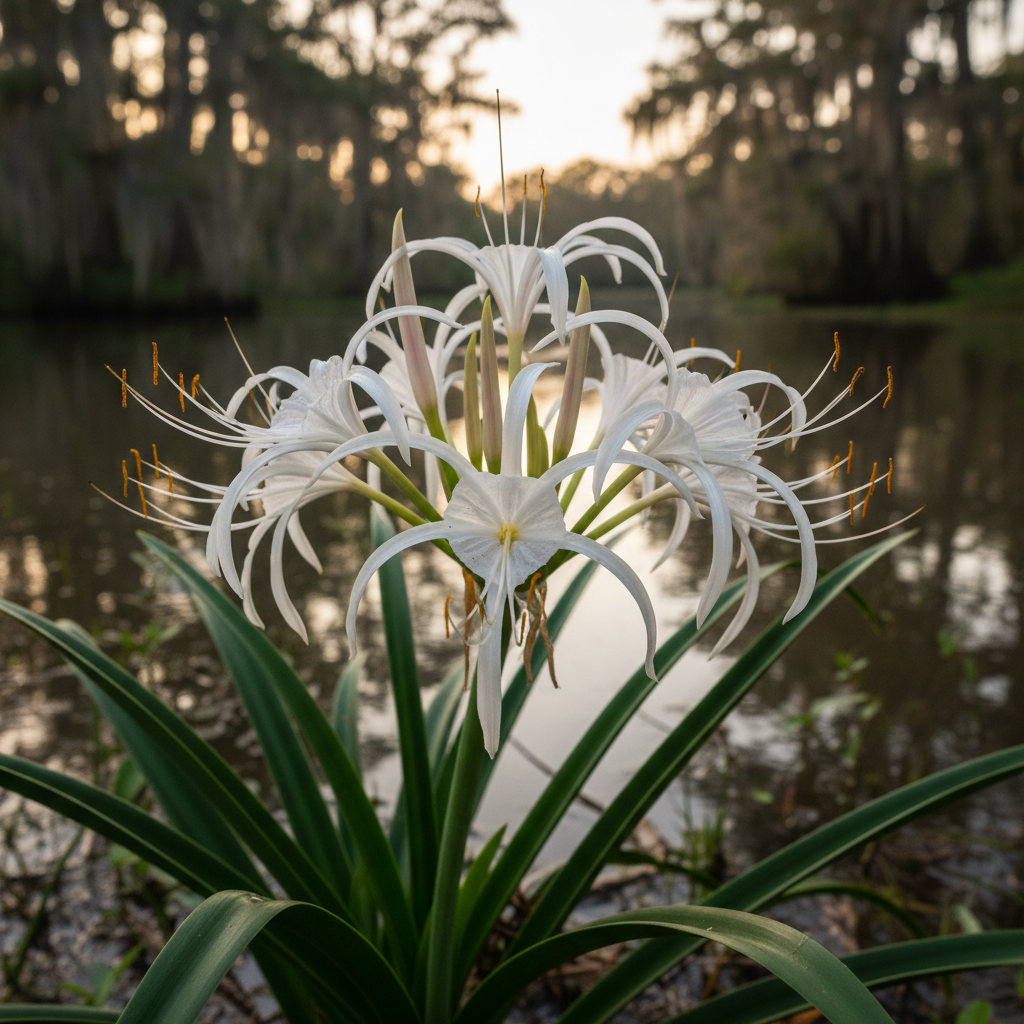
Swamp Lily / String Lily (Crinum americanum) — Native Louisiana Bayou Wildflower
Couldn't load pickup availability
Share
Swamp Lily / String Lily (Crinum americanum)
At dusk, at the water's edge, the Swamp Lily opens. Large white flowers with pink-striped petals and long thread-like stamens — the origin of the name String Lily — release a fragrance that carries across the bayou on still summer evenings, drawing sphinx moths from the dark. This is one of the most spectacular native wildflowers of the Louisiana wetland landscape: a large, bulbous perennial that blooms from June through October, survives the flood, comes back after the freeze, and declares itself with flowers that cannot be missed. A plant of endurance, fragrance, and deep bayou heritage.
Grown and shipped from Big Mamou Enterprises — Bayou Self, Lake Charles, Louisiana.
Botanical Profile
- Botanical Name: Crinum americanum
- Family: Amaryllidaceae (Amaryllis family)
- Native Range: Gulf Coastal Plain from Texas to Florida; native to Louisiana freshwater marshes, bayou margins, and swamp edges
- USDA Hardiness Zones: 7–11
- Mature Size: 2–3 feet tall; spreads by bulb offset into substantial clumps over time
- Bloom Time: June–October; fragrance intensifies at dusk
- Sun: Full sun to part shade
- Soil/Water: Wet to saturated; tolerates standing water; ideal for pond margins, rain gardens, and bayou edges
Ecological Role
Swamp Lily flowers are pollinated by sphinx moths and large native bees, with fragrance that intensifies at dusk to attract night-flying pollinators. Provides cover for frogs and aquatic invertebrates in shallow water margins. Deer resistant. Once established, nearly indestructible.
Cajun Heritage & Traditional Medicine
Known in Cajun tradition as lys des marais — marsh lily — and by some families as la grande fleur — the big flower — because when it blooms, there is no missing it. In the traiteur tradition, Crinum carries alkaloids — lycorine chief among them — that made it a plant of careful, limited use. The crushed bulb was applied externally as a poultice for swollen joints, rheumatic pain, and hard skin growths, using the counter-irritant principle: a controlled irritation that increases circulation and draws out inflammation. Leaf juice was used topically for headaches — rubbed at the temples and the back of the neck. Internal use was rare and cautious. This was a plant you wore more than you drank.
In the Cajun Heritage Garden
Part of the Heritage Garden collection at Big Mamou Enterprises. Plant at the water's edge, in pond margins, or in low spots that stay consistently moist. Evergreen in mild Louisiana winters. Spreads slowly by bulb offset — give it room to naturalize. A plant of genuine presence: it commands the space it occupies.