Wildlife Problem? We Can Help.
Humane, professional nuisance wildlife consulting in Southwest Louisiana.

Big Mamou Enterprises
Sugarberry — Celtis laevigata | Native Louisiana Coastal Food Tree
Sugarberry — Celtis laevigata | Native Louisiana Coastal Food Tree
Couldn't load pickup availability
Share
Built for Louisiana. Survives anything. Feeds everything.
If you live in South Louisiana — clay soil, flood-prone yard, hurricane country — Sugarberry is your tree. It is one of the toughest native trees in the Gulf South. It handles flooding, drought, wind, and salt spray. It grows in standing water and bone-dry uplands. It survives what other trees don't.
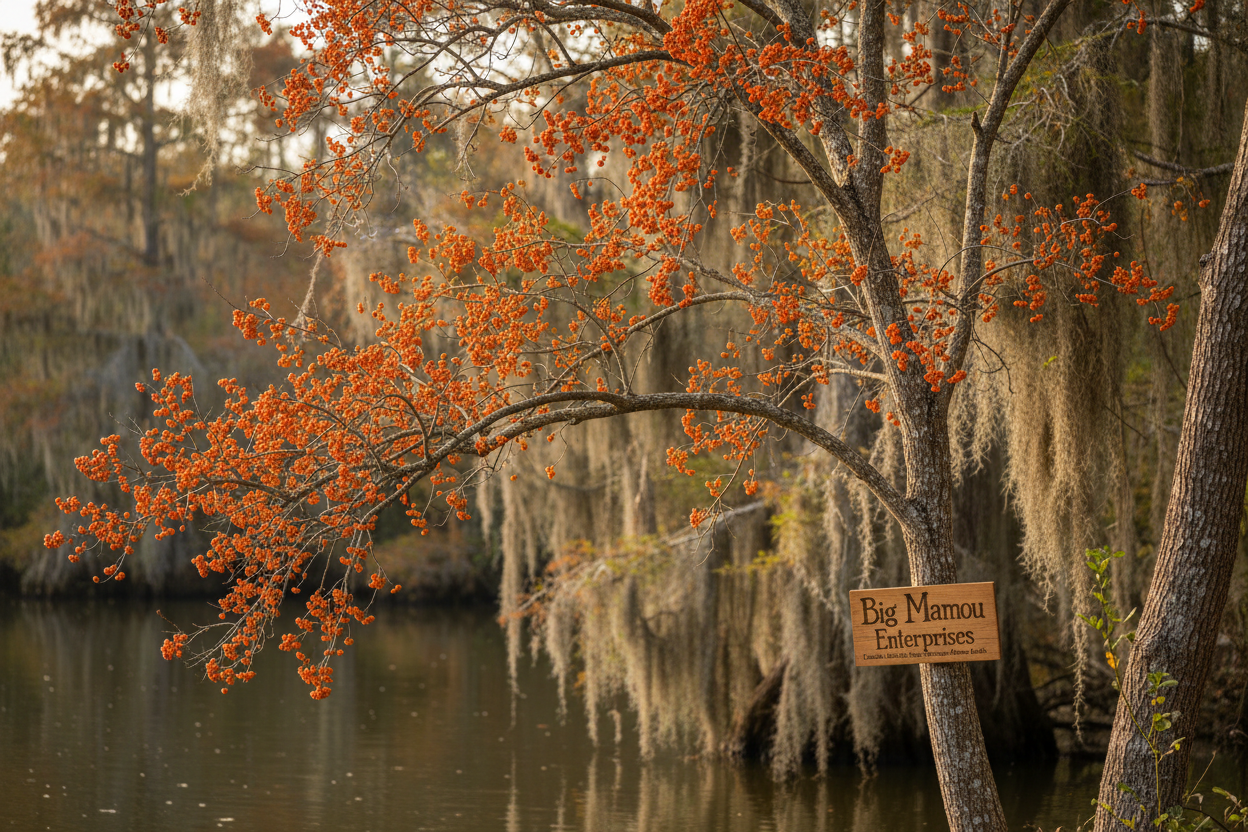
And it produces. The small, sweet berries ripen in fall and are edible — high in calories, fat, and protein, historically eaten by Indigenous peoples across the South. Wildlife absolutely depend on them. Cedar waxwings arrive in flocks. Mockingbirds stake out entire trees. Yellow-rumped warblers fuel up on sugarberries during migration.
Why It Belongs in Your Victory Garden
Most food forest trees ask for decent soil and good drainage. Sugarberry asks for nothing and gives back everything. For Louisiana yards that flood, this is the anchor tree.
Growing Notes
- USDA Zone: 5–9 ✅ All of Louisiana
- Mature Size: 60–80 ft
- Light: Full sun to part shade
- Soil: Extraordinary adaptability — clay, sand, loam, wet or dry
- Fruit Season: September–November
- Wildlife Value: 48+ bird species; critical coastal restoration species
Also known as Hackberry. Preferred by CRCL and CPRA for coastal restoration planting.