Wildlife Problem? We Can Help.
Humane, professional nuisance wildlife consulting in Southwest Louisiana.
Big Mamou Enterprises
Southern Catalpa (Catalpa bignonioides) — Native Louisiana Heritage Shade Tree
Couldn't load pickup availability
Share
Southern Catalpa (Catalpa bignonioides)
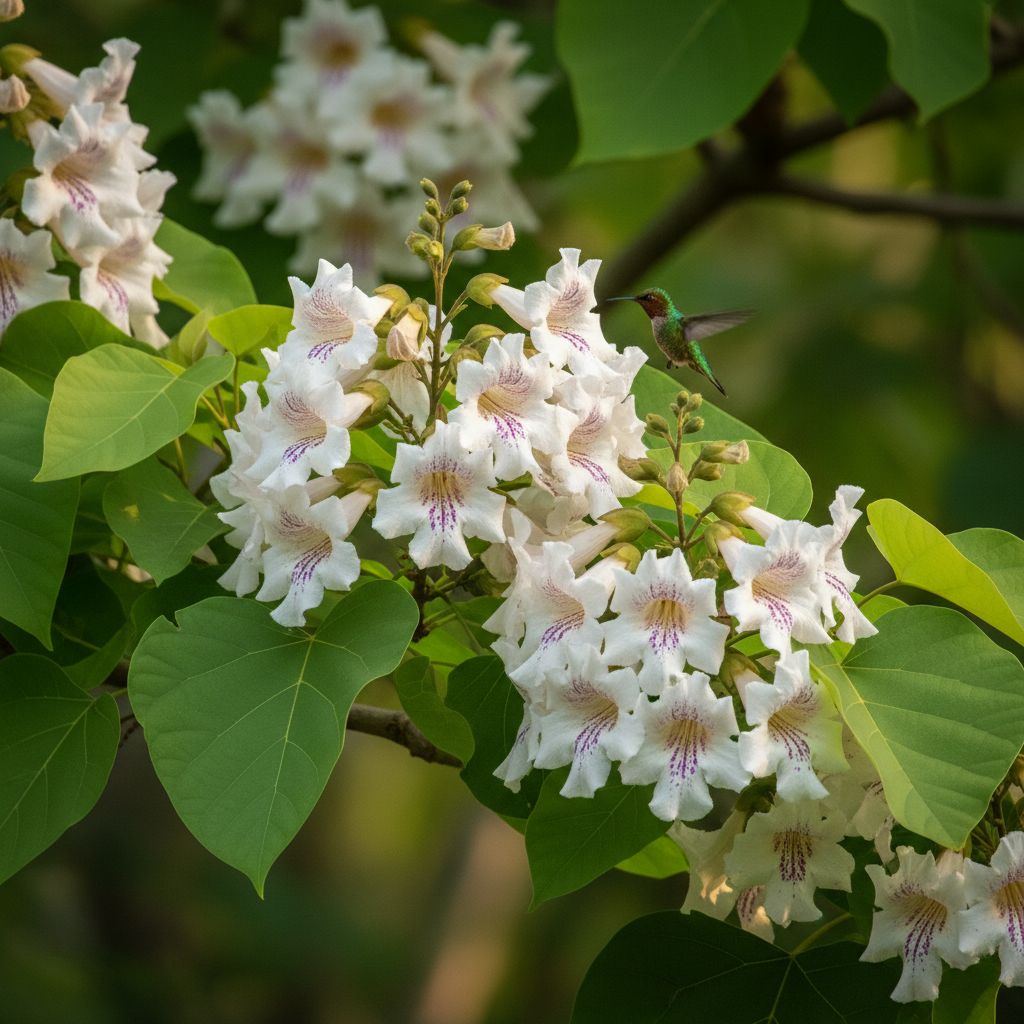
Every old Louisiana homestead had one. Southern Catalpa — the worm tree, the shade tree, the fishing tree — is one of the most distinctive and beloved native trees of the rural South: fast-growing, wide-spreading, with enormous heart-shaped leaves that cast deep shade, spectacular white orchid-like flower clusters in late spring, and long bean-like seed pods that rattle through winter. Louisiana anglers have planted it for generations to harvest the catalpa sphinx caterpillars — the finest freshwater fishing bait in the South. A tree of deep heritage, quiet medicine, and extraordinary generosity.
Grown and shipped from Big Mamou Enterprises — Bayou Self, Lake Charles, Louisiana.
Botanical Profile
- Botanical Name: Catalpa bignonioides
- Family: Bignoniaceae (Trumpet Creeper family)
- Native Range: Southeastern United States from Georgia to Mississippi; naturalized throughout Louisiana in bottomland forests, stream banks, and rural homesteads
- USDA Hardiness Zones: 5–9
- Mature Size: 25–40 feet tall and wide
- Bloom Time: May–June; large white orchid-like flower clusters
- Sun: Full sun to part shade
- Soil: Moist to wet; tolerates clay, periodic flooding, and poor soils; adaptable and fast-growing
Ecological & Cultural Role
Southern Catalpa is the exclusive host plant of the Catalpa Sphinx moth — whose larvae, the famous “catalpa worms,” are one of the most prized freshwater fishing baits in the South. Flowers are visited by hummingbirds, native bees, and butterflies. Provides large-canopy shade and nesting habitat for forest birds. A living landmark of the Louisiana rural landscape.
Cajun Heritage & Traditional Medicine
Known in Cajun tradition as catalpa — the name held across languages without translation — and by some families as l’arbre à vers — the worm tree — for the sphinx caterpillars that make the finest fishing bait in the South. In the traiteur tradition, bark tea was used as a mild sedative and antispasmodic for nervous conditions, anxiety, and sleeplessness. Seed pod tea was used for asthma and bronchial spasms — with genuine bronchodilating compounds that modern research has begun to confirm. Crushed leaves were applied as a poultice for wounds and skin irritations. It was never a dramatic medicine. It was a quiet one, for quiet suffering.
In the Cajun Heritage Garden
Part of the Heritage Garden collection at Big Mamou Enterprises. Plant in full sun to part shade in almost any soil. Fast-growing — one of the quickest native shade trees available. Large heart-shaped leaves provide deep shade; long seed pods persist through winter. Plant it where you want shade quickly and a piece of Louisiana heritage in your yard for generations.