Wildlife Problem? We Can Help.
Humane, professional nuisance wildlife consulting in Southwest Louisiana.

Big Mamou Enterprises
Rosemary – Salvia rosmarinus | French Cajun Kitchen & Cemetery Herb
Rosemary – Salvia rosmarinus | French Cajun Kitchen & Cemetery Herb
Couldn't load pickup availability
Share
The Herb of Remembrance — And in Louisiana, It Remembers Everything
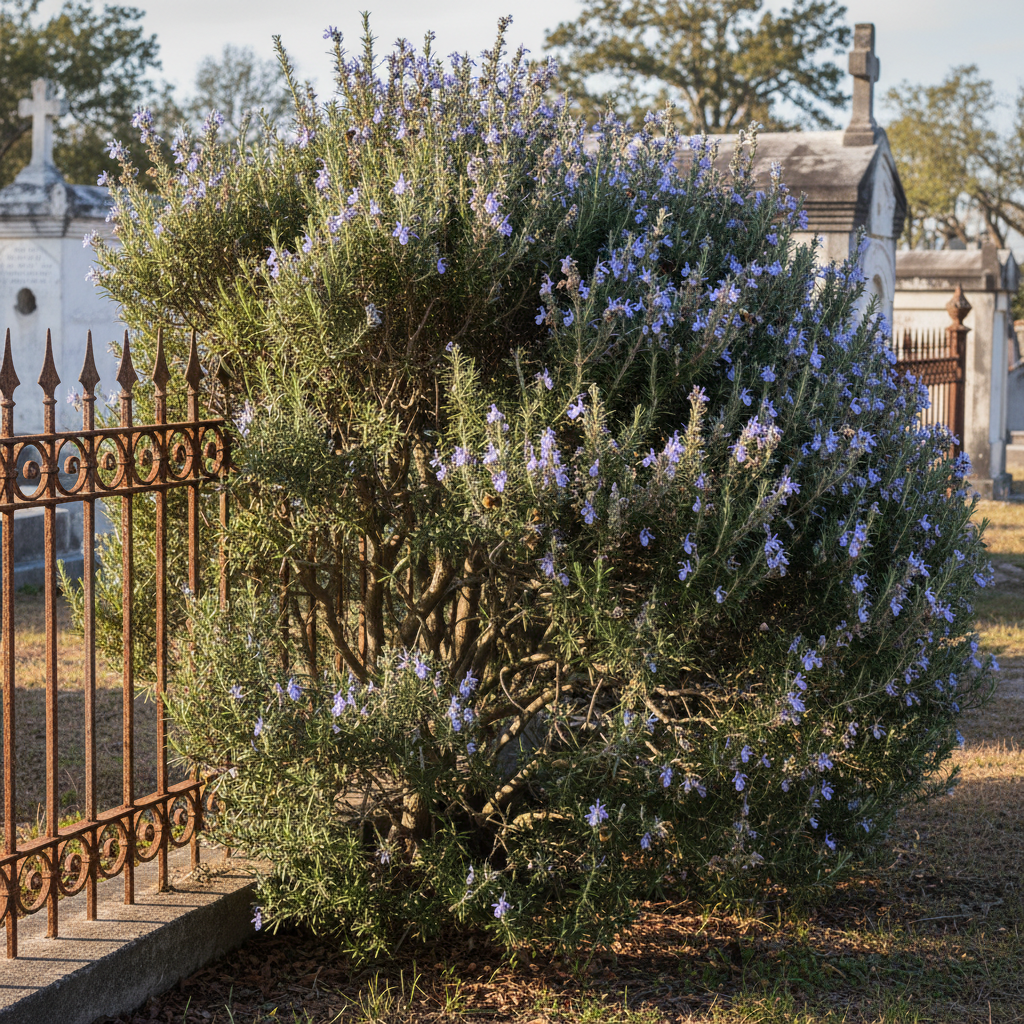
Salvia rosmarinus arrived with the first French and Spanish settlers to the Gulf Coast and never left. It rooted itself in the dooryards of Cajun homesteads, along the iron fences of Creole cemeteries, and in the kitchen gardens of generations of Louisiana grandmothers who used it to season pork roasts, wild game, and the long-simmered gravies that define Cajun Sunday cooking. In the old Louisiana Catholic tradition, rosemary was planted at graves as a symbol of faithful memory — and you can still find enormous, century-old rosemary shrubs standing sentinel in rural South Louisiana cemeteries today, untended and immortal.
In Zone 9A, rosemary is not merely a garden herb — it is a landscape shrub. Given full sun and excellent drainage, it grows into a magnificent woody specimen 4–6 feet tall and equally wide, covered in tiny blue-violet flowers that feed bees from late winter through spring when almost nothing else is blooming. The needle-like, resinous foliage holds its fragrance through every season, filling the air around it with the clean, piney, camphor-edged scent that is one of the great perfumes of the herb garden. Brush against it walking by and your hands carry the fragrance for hours.
For the Cajun kitchen, fresh rosemary from your own garden is transformative — incomparably more aromatic and flavorful than any dried herb from a grocery shelf. Tuck sprigs under a pork shoulder, stir into a dark roux, or infuse into olive oil for bread dipping. And in the garden, it earns its place on beauty alone — silvery-green, sculptural, and alive with bees every winter and spring.
🌿 Growing Notes (Zone 9A — Lake Charles, LA)
- Sun: Full sun — 8+ hours; the more sun the better
- Soil: Well-drained to dry; lean, sandy, or gravelly preferred; raised beds ideal in clay areas
- Water: Drought-tolerant once established; root rot from overwatering is the primary threat in Louisiana
- Mature size: 4–6 ft tall and wide; forms a beautiful woody shrub over several years
- Growth rate: Moderate; becomes increasingly drought-tolerant and impressive with age
- Zone 9A tip: Prostrate varieties work beautifully cascading over raised bed walls or retaining borders
- Wildlife value: Critical early-season pollen source for native bees and honeybees in late winter
❓ Frequently Asked Question
How big does rosemary actually get in Louisiana, and can it be used as a landscape shrub?
In Zone 9A with full sun and good drainage, rosemary grows into a substantial woody shrub — 4 to 6 feet tall and equally wide over several years. It is absolutely a landscape plant here, not just a pot herb. The century-old rosemary shrubs still standing in rural South Louisiana cemeteries are proof: given the right conditions, rosemary in Louisiana is essentially permanent and grows into something genuinely architectural.
⚠️ Disclaimer: Plant descriptions are for horticultural and educational purposes only. Consult a qualified herbalist or healthcare provider before any medicinal use.