Wildlife Problem? We Can Help.
Humane, professional nuisance wildlife consulting in Southwest Louisiana.

Big Mamou Enterprises
Rattlesnake Master (Eryngium yuccifolium)
Rattlesnake Master (Eryngium yuccifolium)
Couldn't load pickup availability
Share
Rattlesnake Master (Eryngium yuccifolium)
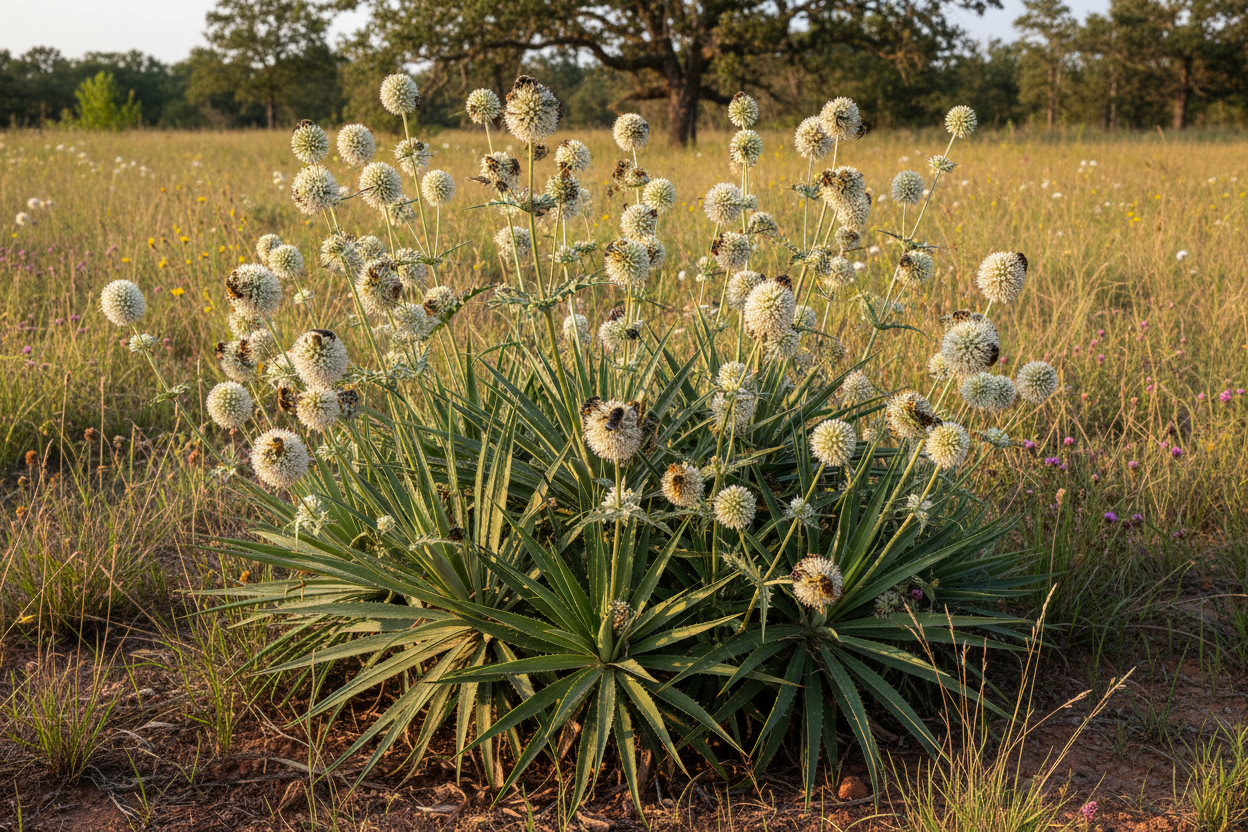
Rattlesnake Master is the prairie's most otherworldly plant — its yucca-like spiky leaves rising in a bold rosette, its spherical white flower heads hovering on branching stems like something from a science fiction landscape. It is a plant that makes people stop and ask "what IS that?" — and the answer is one of the most ecologically significant and culturally storied plants of the North American prairie.
Botanical Profile
- Family: Apiaceae (Carrot family)
- Native Range: Eastern and central United States from New Jersey to Florida and west to Kansas and Texas; native to Louisiana's upland prairies and pine savannas
- USDA Hardiness Zones: 3–8
- Mature Size: 3–5 feet tall
- Bloom Time: June–August
- Sun: Full sun
- Soil: Well-drained, dry to average; drought-tolerant; tolerates poor soils
Prairie Movement & Ecological Role
Rattlesnake Master's spherical flower heads are among the most important pollinator resources in the prairie, attracting an extraordinary diversity of native bees, wasps, beetles, and flies — over 100 insect species have been documented visiting its blooms. It is a host plant for the Rattlesnake Master Borer Moth (Papaipema eryngii), a specialist moth found only where Rattlesnake Master grows. Its name derives from its traditional use by Indigenous peoples as a snakebite remedy — its roots were chewed and applied to bites, and it was carried as a protective talisman. The Meskwaki, Omaha, and other nations used it medicinally for a range of conditions.
In the Prairie Movement Strip
Part of the Prairie Movement Strip | Wind, Pollinators & Motion collection at Big Mamou Enterprises, Rattlesnake Master is the prairie strip's most dramatic architectural plant — bold, spiky, and absolutely alive with pollinators.