Wildlife Problem? We Can Help.
Humane, professional nuisance wildlife consulting in Southwest Louisiana.

Big Mamou Enterprises
Purple Coneflower – Echinacea purpurea | Native Prairie Apothecary Perennial
Purple Coneflower – Echinacea purpurea | Native Prairie Apothecary Perennial
Couldn't load pickup availability
Share
Purple Coneflower (Echinacea purpurea)
Purple Coneflower is the plant that made immune support a household word — and it earned that reputation the hard way, through centuries of documented use by Indigenous peoples, Cajun traiteurs, and European herbalists who all arrived at the same conclusion: this plant helps the body fight back.
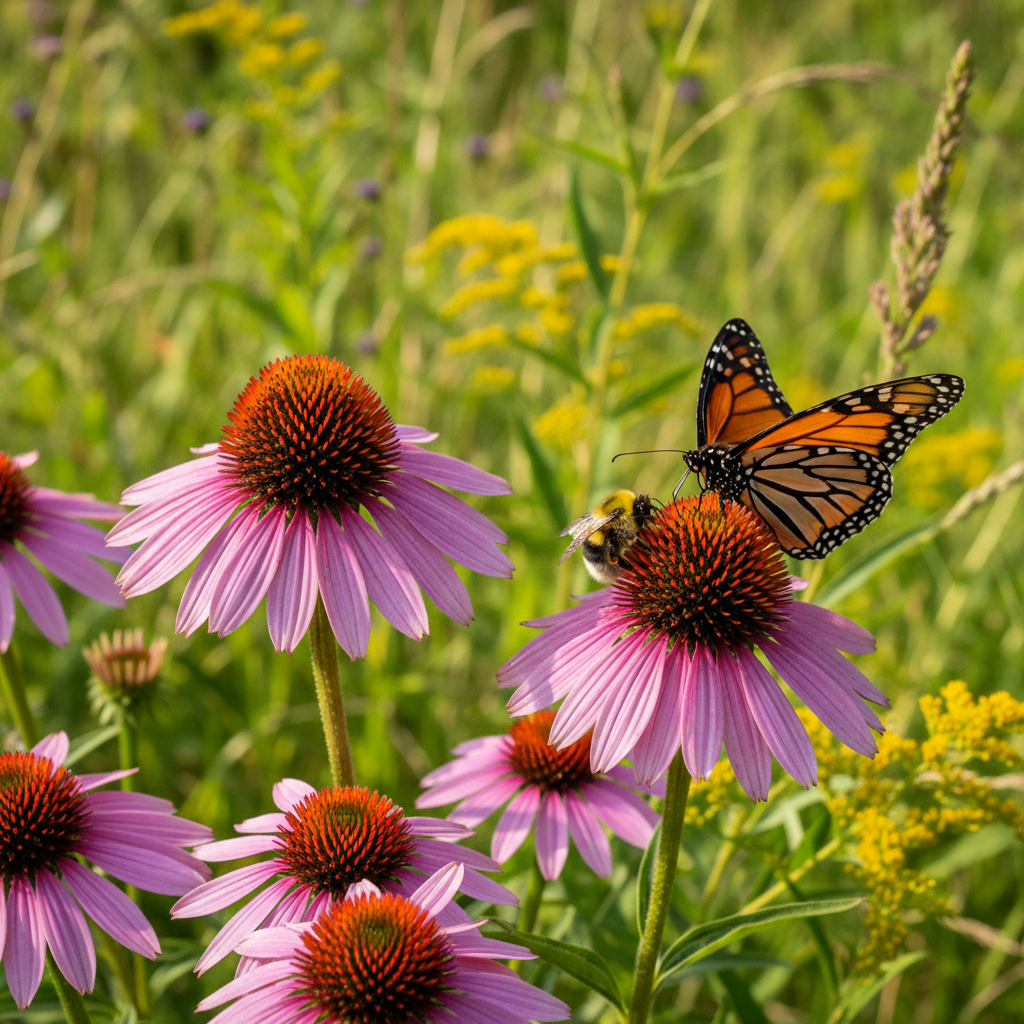
Its flowers are unmistakable — wide, daisy-like rays of rose-purple surrounding a spiky, copper-brown central cone that stands tall even after the petals fall. In the late-summer garden, it glows. In the medicine chest, it works.
Botanical Profile
- Family: Asteraceae (Daisy family)
- Species: Echinacea purpurea — Purple Coneflower
- Native Range: Eastern and central North America; naturalized throughout Louisiana and the Gulf South
- USDA Hardiness Zones: 3–9
- Mature Size: 2–4 feet tall
- Bloom Time: June–October
- Sun: Full sun to part shade
- Soil: Well-drained to average; drought-tolerant once established; tolerates clay
Traditional & Medicinal Uses
Echinacea purpurea has one of the most thoroughly studied medicinal records of any North American native plant. Indigenous peoples of the Great Plains and Southeast used it for more conditions than almost any other plant — wounds, infections, toothaches, sore throats, snakebite, and fever. Cajun traiteurs kept it in the dooryard garden as a reliable immune tonic, brewing the root and leaf into a strong tea at the first sign of illness.
Active constituents include alkylamides, polysaccharides, caffeic acid derivatives (echinacoside, cichoric acid), and glycoproteins — all documented to stimulate immune response, reduce inflammation, and support upper respiratory health. Clinical studies confirm its effectiveness in reducing the duration and severity of colds.
Ecological Role
Purple Coneflower is a pollinator powerhouse — attracting bumblebees, native bees, butterflies, and goldfinches who feed on the seed heads through winter. Leave the spent flower heads standing through the cold months and you'll have goldfinches in your garden every morning. It spreads slowly by seed and clump division, naturalizing into generous colonies over time.
In the Heritage Garden
Part of the Heritage Garden collection at Big Mamou Enterprises, this Purple Coneflower carries the living memory of prairie medicine into the bayou garden — beautiful, clinically validated, and deeply rooted in the land that shaped Cajun healing.