Wildlife Problem? We Can Help.
Humane, professional nuisance wildlife consulting in Southwest Louisiana.

Big Mamou Enterprises
Pawpaw (Asimina triloba)
Pawpaw (Asimina triloba)
Couldn't load pickup availability
Share
Pawpaw (Asimina triloba)
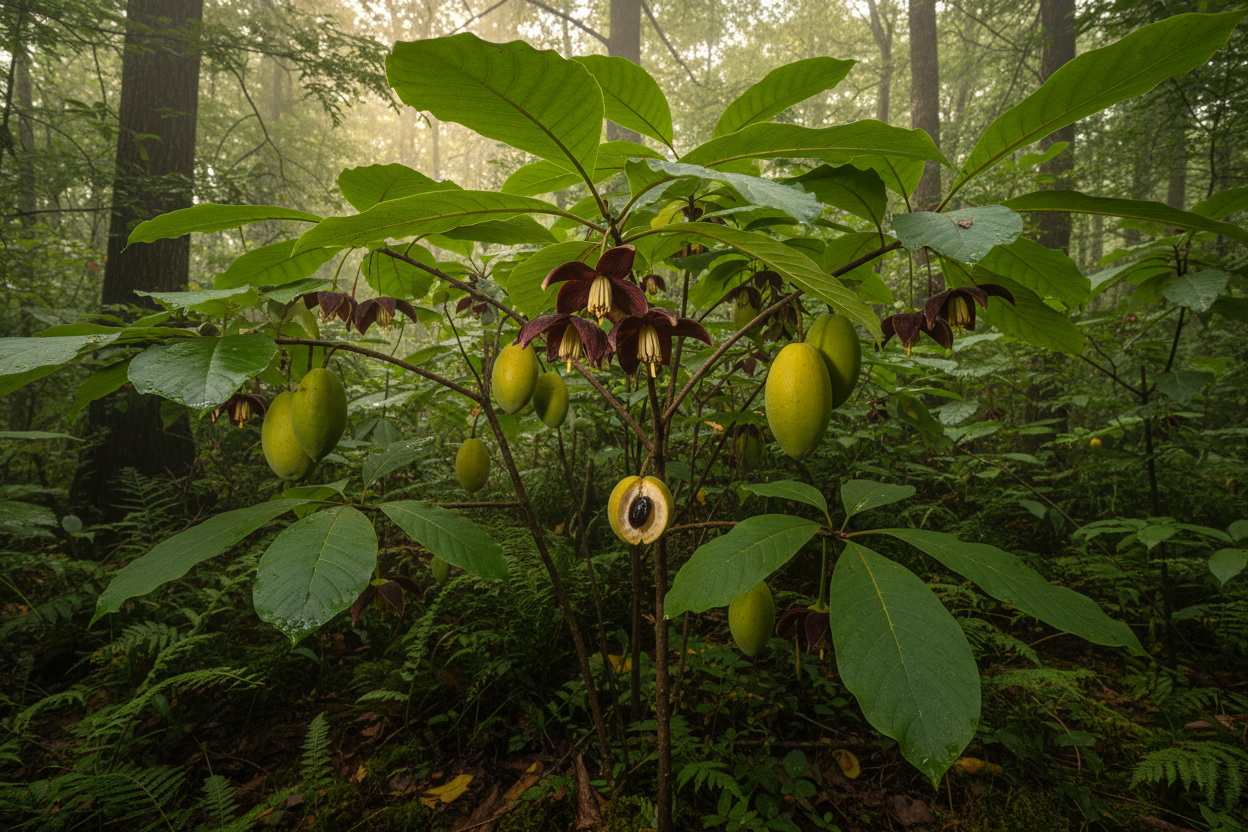
The Pawpaw is North America's largest native fruit — a custard-soft, tropical-tasting treasure hiding in the understory of bottomland forests. Its flavor is a revelation: mango, banana, and vanilla folded together in a fruit that looks like a small green mango and melts on the tongue. Indigenous peoples and Acadian settlers alike knew exactly where to find it, and the Pawpaw patch was a closely guarded family secret passed down through generations.
Botanical Profile
- Family: Annonaceae (Custard Apple family — the only temperate member of a tropical family)
- Native Range: Eastern North America from Ontario to Florida and west to Nebraska; found in moist bottomland forests and bayou edges throughout Louisiana
- USDA Hardiness Zones: 5–8
- Mature Size: 15–25 feet tall; spreads by root sprouts to form colonies
- Bloom Time: March–May (before leaves); fruit ripens August–October
- Sun: Part shade (understory) to full sun once established
- Soil: Moist, rich, well-drained; thrives in bottomland and bayou edge conditions
Cultural & Foodways Heritage
Pawpaw was a staple food for Indigenous peoples across the Eastern Woodlands, eaten fresh, dried, and incorporated into breads and puddings. Acadian settlers adopted it eagerly — it was free, abundant, and delicious. In Cajun Louisiana, Pawpaw patches along the bayou were harvested each fall, the soft fruit eaten fresh or made into puddings and custards. The fruit's short shelf life — it ripens and softens within days — meant it was always a local, seasonal, community food. The Gautreau family's connection to the Louisiana bottomlands made the Pawpaw a familiar presence in the Acadian foodway.
Ecological Role
Pawpaw is the sole host plant for the Zebra Swallowtail butterfly (Eurytides marcellus), one of the most striking native butterflies of the Eastern U.S., whose caterpillars feed exclusively on Pawpaw leaves. Its unusual maroon flowers are pollinated by flies and beetles rather than bees. Its fruit feeds foxes, raccoons, opossums, and black bears. It is a keystone species of the bottomland forest understory.
In the Acadian Dooryard Garden
Part of the Cajun Prairie Heritage | The Acadian Dooryard Garden collection at Big Mamou Enterprises, Pawpaw is the forgotten fruit of the Acadian table — exotic, native, and waiting to be rediscovered.