Wildlife Problem? We Can Help.
Humane, professional nuisance wildlife consulting in Southwest Louisiana.

Big Mamou Enterprises
Passionflower Vine (Passiflora incarnata)
Passionflower Vine (Passiflora incarnata)
Couldn't load pickup availability
Share
Passionflower Vine (Passiflora incarnata)
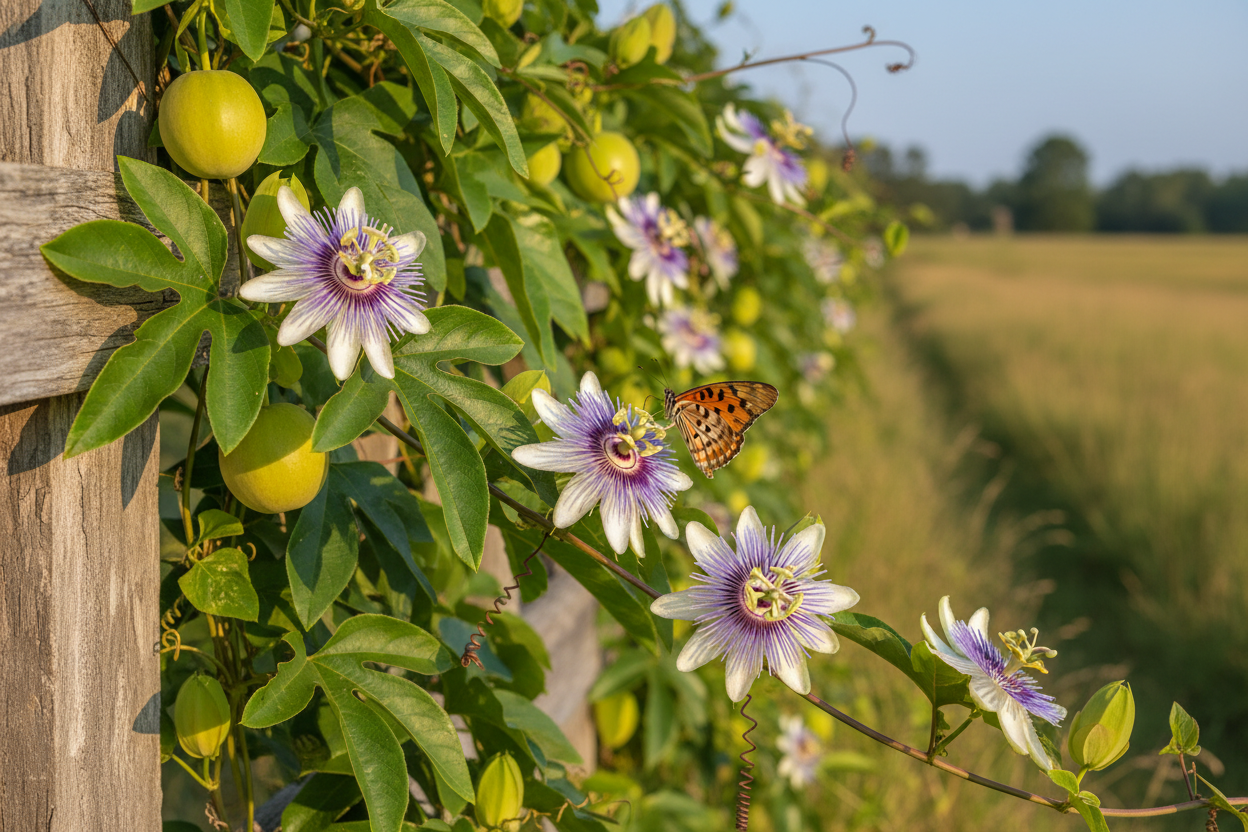
Passionflower is one of the most extraordinary wildflowers in North America — its blooms so intricate and otherworldly that Spanish missionaries in the 16th century saw in them the symbols of the Passion of Christ: the corona as the crown of thorns, the five stamens as the wounds, the three stigmas as the nails. In Cajun and Creole Louisiana, it was known as la fleur de la passion, and its fruit — the maypop — was eaten fresh and made into jelly by generations of Acadian families.
Botanical Profile
- Family: Passifloraceae (Passionflower family)
- Native Range: Eastern United States from Virginia to Florida and west to Kansas and Texas; native to Louisiana's prairies, roadsides, and woodland edges
- USDA Hardiness Zones: 5–10
- Mature Size: Vine to 25 feet; dies back to roots in winter, re-emerges vigorously in spring
- Bloom Time: June–September; fruit (maypop) ripens August–October
- Sun: Full sun to part shade
- Soil: Well-drained; tolerates poor, dry soils; spreads by underground runners
Cultural & Foodways Heritage
The maypop — Passionflower's egg-sized yellow fruit — was a beloved wild food of Cajun and Creole Louisiana, eaten fresh when ripe (its flavor a tropical blend of guava and citrus) and made into jelly and preserves. Indigenous peoples of the Southeast used the roots as a sedative and the leaves as a poultice for bruises and inflammation. Acadian families adopted both the food and the medicine, and the Passionflower vine scrambling over the fence row was a familiar sight on the Cajun prairie homestead. Its active constituents — flavonoids including chrysin and vitexin — have documented anxiolytic and sedative properties, validating its traditional use as a calming herb.
Ecological Role
Passionflower is the sole host plant for Gulf Fritillary, Zebra Longwing (Florida's state butterfly), and Variegated Fritillary butterflies, whose caterpillars feed exclusively on its leaves. Its complex flowers are pollinated by large native bees and bumblebees. It is one of the most ecologically significant native vines in the South.
In the Acadian Dooryard Garden
Part of the Cajun Prairie Heritage | The Acadian Dooryard Garden collection at Big Mamou Enterprises, Passionflower is the Acadian fence row's most spectacular resident — exotic, native, and alive with fritillary butterflies all summer long.