Wildlife Problem? We Can Help.
Humane, professional nuisance wildlife consulting in Southwest Louisiana.

Big Mamou Enterprises
Lanceleaf Coreopsis (Coreopsis lanceolata)
Lanceleaf Coreopsis (Coreopsis lanceolata)
Couldn't load pickup availability
Share
Lanceleaf Coreopsis (Coreopsis lanceolata)
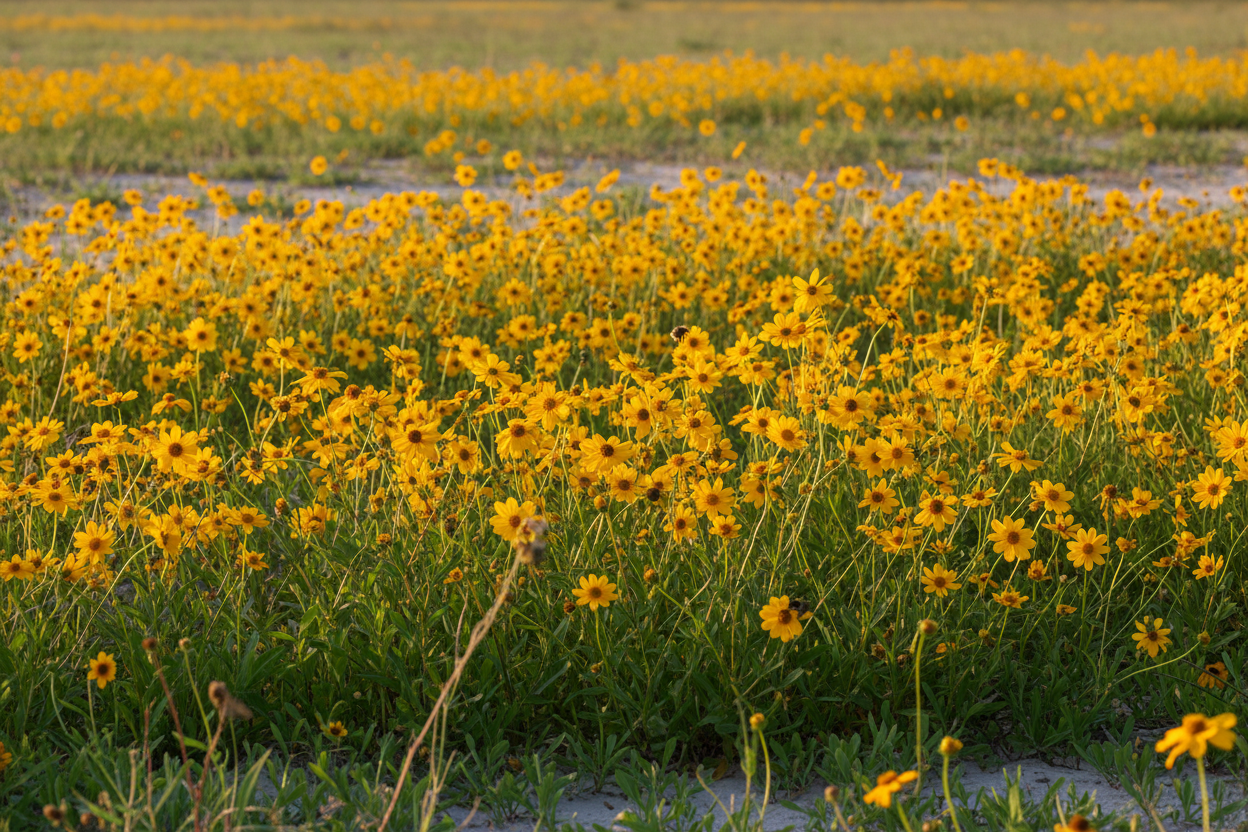
Lanceleaf Coreopsis is the prairie's early golden burst — one of the first wildflowers to bloom in the spring prairie, its bright yellow daisy-like flowers appearing in May and June when the grasses are still finding their footing. It is Louisiana's state wildflower, and its cheerful, long-stemmed blooms have graced the roadsides and prairies of the Gulf South for as long as the prairie has existed.
Botanical Profile
- Family: Asteraceae (Daisy family)
- Native Range: Eastern and central United States from Michigan to Florida and west to Kansas; native to Louisiana's prairies, roadsides, and open sandy areas
- USDA Hardiness Zones: 3–9
- Mature Size: 1–2 feet tall
- Bloom Time: April–July (early season; may rebloom in fall)
- Sun: Full sun
- Soil: Well-drained, sandy to loamy; drought-tolerant; self-seeds freely to naturalize
Prairie Movement & Ecological Role
Lanceleaf Coreopsis is a critical early-season nectar source for native bees emerging from winter dormancy, including specialist Coreopsis bees (Calliopsis species) that are oligolectic on Coreopsis flowers. It is a host plant for the Wavy-lined Emerald moth and the Coreopsis Beetle. Its seeds feed small songbirds through summer. Its ability to self-seed and naturalize makes it one of the most effective wildflowers for establishing a low-maintenance prairie meadow — plant it once and it returns year after year, spreading slowly to fill the prairie strip with early-season gold.
In the Prairie Movement Strip
Part of the Prairie Movement Strip | Wind, Pollinators & Motion collection at Big Mamou Enterprises, Lanceleaf Coreopsis is the prairie strip's spring opener — Louisiana's own wildflower, golden and generous from the first warm days of April.