Wildlife Problem? We Can Help.
Humane, professional nuisance wildlife consulting in Southwest Louisiana.

Big Mamou Enterprises
Carolina Buckthorn (Frangula caroliniana)
Carolina Buckthorn (Frangula caroliniana)
Couldn't load pickup availability
Share
Carolina Buckthorn (Frangula caroliniana)
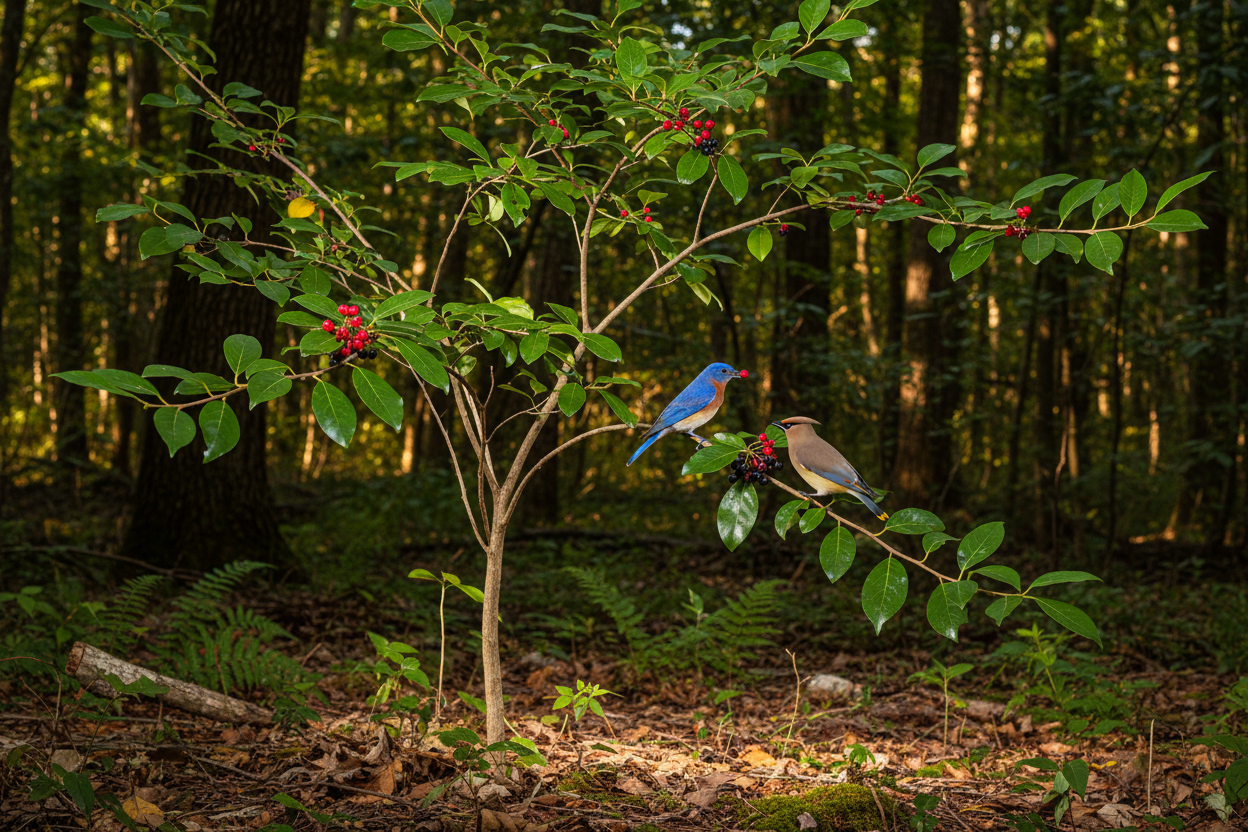
Carolina Buckthorn is one of the South’s most underappreciated native shrub-trees — a graceful, multi-stemmed small tree of the woodland understory whose berries ripen in a spectacular sequence of red, then black, often with both colors present on the same branch simultaneously. It is a plant of quiet elegance and extraordinary wildlife value, perfectly suited to the dappled shade of the Louisiana bayou woodland garden.
Botanical Profile
- Family: Rhamnaceae (Buckthorn family)
- Native Range: Southeastern United States from Virginia to Florida and west to Texas; native to Louisiana’s moist woodland understories, bayou edges, and limestone bluffs
- USDA Hardiness Zones: 5–9
- Mature Size: 10–15 feet tall (large shrub to small tree)
- Bloom Time: April–June (small white flowers); berries ripen July–October, transitioning red to black
- Sun: Part shade to full shade
- Soil: Moist, well-drained; tolerates clay and alkaline conditions; adaptable to woodland understory
Ecological Role
Carolina Buckthorn’s berries — ripening in a simultaneous display of red and black — are consumed by over 20 bird species including Eastern Bluebirds, American Robins, Cedar Waxwings, and migratory thrushes. It is a host plant for the Zabulon Skipper and Gray Hairstreak butterflies. Its shade tolerance makes it an ideal understory companion to the large canopy oaks and maples, filling the middle layer of the woodland garden with structure, berries, and wildlife value.
Cultural Heritage
What the old folks knew — Buckthorn species carry a long history in folk botanical traditions across cultures, their bark noted in both European and Indigenous heritage practice. Carolina Buckthorn was recognized by Indigenous peoples of the Southeast as a plant of the woodland understory, and its berries were noted as a wildlife food source in early Cajun natural history. Its simultaneous red-and-black berry display made it a distinctive landmark in the Louisiana woodland.
In the Living Canopy & Understory
Part of the Jardin — The Living Canopy & Understory collection at Big Mamou Enterprises, Carolina Buckthorn is the woodland garden’s quiet jewel — shade-tolerant, berry-rich, and alive with birds through summer and fall.
⚠️ Disclaimer: Plant descriptions are for horticultural and educational purposes only. Consult a qualified herbalist or healthcare provider before any medicinal use.