Wildlife Problem? We Can Help.
Humane, professional nuisance wildlife consulting in Southwest Louisiana.

Big Mamou Enterprises
Calendula — Souci (Calendula officinalis) | Traiteur Skin Healer & Anti-Inflammatory Herb
Calendula — Souci (Calendula officinalis) | Traiteur Skin Healer & Anti-Inflammatory Herb
Couldn't load pickup availability
Share
Souci. The herb that heals what you can see — and what you can't.
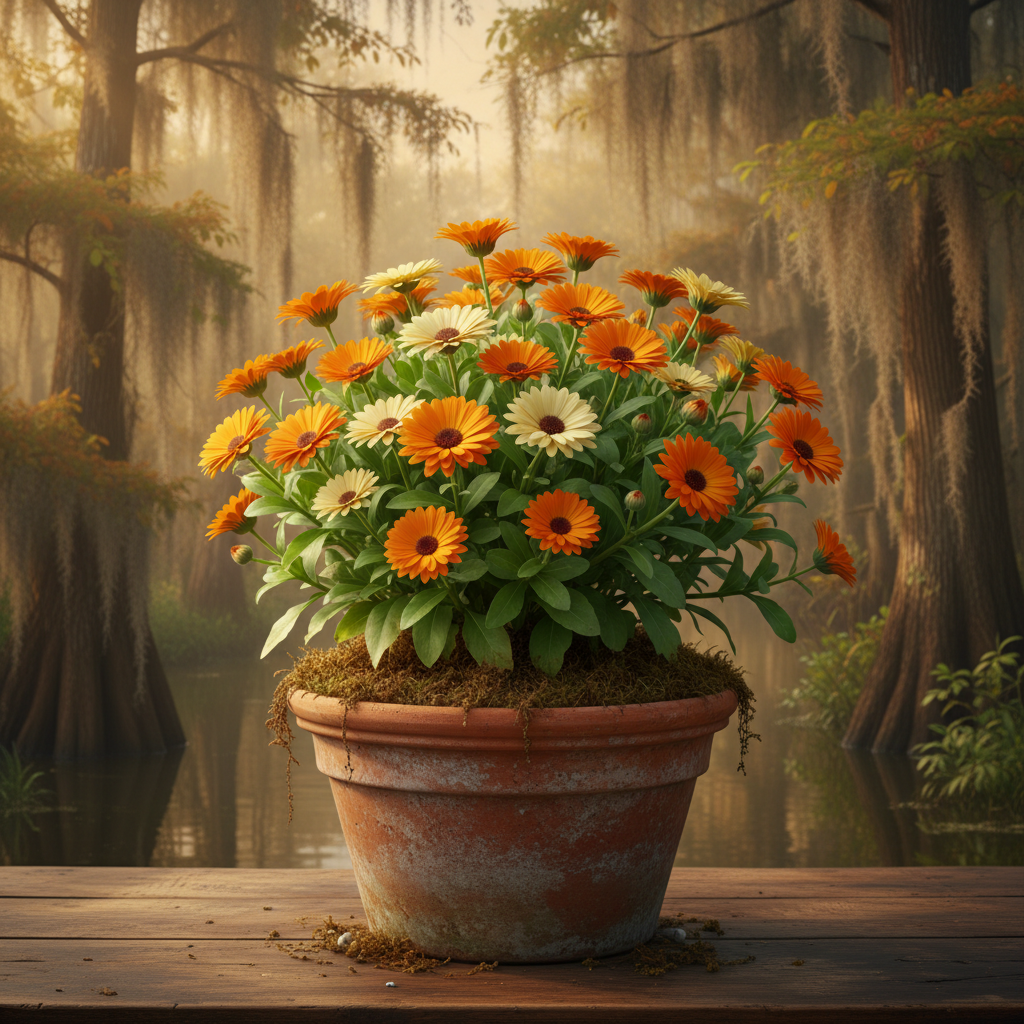
Calendula holds a beloved place in the Cajun Traiteur tradition as the herb of the skin and the gut. Its brilliant orange and gold flowers were gathered and infused into oils and salves for wounds, burns, rashes, and irritated skin. It was the herb the Traiteur reached for when the body's surface needed tending — when a child had a rash, when a wound was slow to close, when the sun had been too harsh.
Calendula is one of the most well-documented wound-healing and anti-inflammatory herbs in the world. Its flavonoids, triterpenoids, and carotenoids work together to reduce inflammation, stimulate tissue repair, and inhibit bacterial and fungal growth. Internally, it soothes and heals the mucous membranes of the digestive tract, making it valuable for gastritis, ulcers, and inflammatory bowel conditions. Its golden petals are also edible — beautiful scattered over salads or steeped into teas.
In Louisiana's garden, Calendula blooms prolifically in the cooler months — fall through spring — filling the garden with warm gold and orange color when little else is flowering. It self-seeds readily and returns year after year, a generous and cheerful presence in the healing garden.
- Annual; blooms fall through spring in Louisiana's climate
- Full sun; prefers cooler seasons; self-seeds readily
- Anti-inflammatory, wound-healing, antimicrobial, and antifungal
- Petals edible and medicinal; used in oils, salves, teas, and tinctures
- Attracts beneficial insects and pollinators
Plant Details
- Botanical name: Calendula officinalis
- Cajun name: Souci
- Family: Asteraceae
- Type: Cool-season annual (self-seeds readily)
- Bloom season: Fall through spring in Louisiana
- Sun: Full sun
- Water: Moderate; prefers well-drained soil
- Origin: Native to southern Europe and the Mediterranean; cultivated in Louisiana Cajun and Creole healing gardens for generations
Common Questions
What is Calendula (Souci) used for in Cajun tradition?
In the Cajun Traiteur tradition, Calendula — called Souci — was infused into oils and salves for wounds, burns, rashes, and slow-healing skin. It was also used as a tea to soothe the digestive tract, particularly for gastritis and inflammation. Gentle enough for children, it was one of the most trusted herbs in the Traiteur's garden.
Is Calendula a good plant for Louisiana gardens?
Yes. Calendula thrives as a cool-season annual in the Gulf South, blooming fall through spring when most other plants are dormant. It self-seeds readily, so once established it returns year after year with minimal effort.
Are Calendula flowers edible?
Yes — Calendula petals are edible and have a mild, slightly peppery flavor. They can be scattered over salads, steeped into teas, or infused into honey. They are also widely used in herbal oils, salves, and tinctures.
Does Calendula attract pollinators?
Absolutely. Calendula's bright orange and gold flowers are highly attractive to bees, butterflies, and other beneficial insects, making it a valuable companion plant in any healing or kitchen garden.
What size plant will I receive?
Calendula is available in three sizes: Small (4" pot), Medium (1-gallon pot), and Large (3-gallon pot). All plants are shipped as healthy, rooted specimens ready to transplant.
⚠️ Disclaimer: This plant is sold as a living heritage and garden plant. Traditional uses are shared for cultural and educational purposes only. This product is not intended to diagnose, treat, cure, or prevent any disease. Consult a qualified healthcare provider before using any plant medicinally.