Wildlife Problem? We Can Help.
Humane, professional nuisance wildlife consulting in Southwest Louisiana.

Big Mamou Enterprises
Brownseed Paspalum (Paspalum plicatulum)
Brownseed Paspalum (Paspalum plicatulum)
Couldn't load pickup availability
Share
Brownseed Paspalum (Paspalum plicatulum)
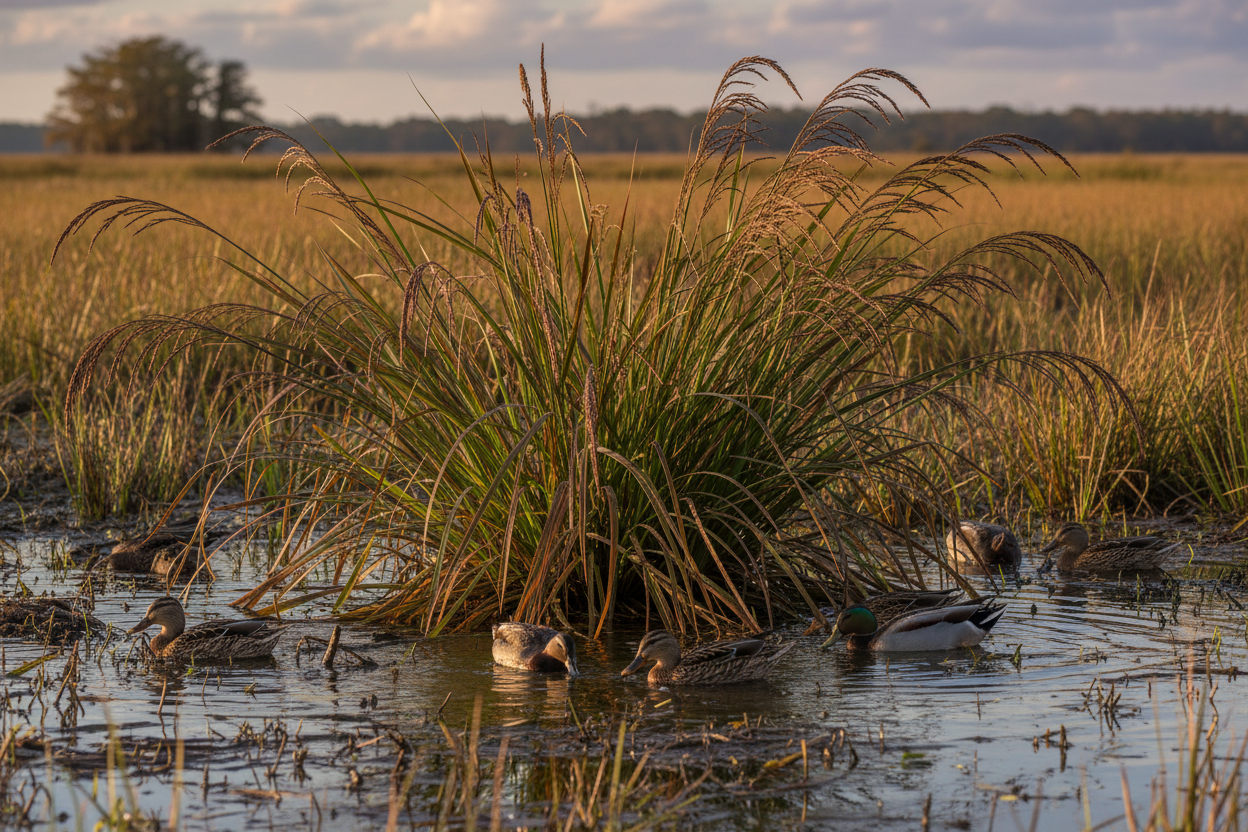
Brownseed Paspalum is one of Louisiana's most important native warm-season grasses — a tough, adaptable, and ecologically generous grass of the coastal prairie and wet meadow that provides critical food and cover for wildlife through the lean months of late fall and winter. Less showy than its bluestem cousins, it is the prairie's workhorse: reliable, productive, and deeply rooted in the Louisiana landscape.
Botanical Profile
- Family: Poaceae (Grass family)
- Native Range: Southeastern United States from Virginia to Florida and west to Texas; native to Louisiana's coastal prairies, wet meadows, and disturbed grasslands
- USDA Hardiness Zones: 7–11
- Mature Size: 2–4 feet tall
- Bloom/Seed Time: July–October
- Sun: Full sun
- Soil: Moist to wet; tolerates clay, periodic flooding, and poor soils; highly adaptable
Prairie Movement & Ecological Role
Brownseed Paspalum's seeds are a critical food source for waterfowl — particularly Mottled Ducks, Teal, and Pintails — as well as ground-feeding songbirds including Savannah Sparrows and Grasshopper Sparrows. Its dense growth provides nesting cover for ground-nesting birds and small mammals. It is a key component of Louisiana coastal prairie restoration and waterfowl habitat management, valued by wildlife managers for its high seed production and palatability to ducks and geese.
In the Prairie Movement Strip
Part of the Prairie Movement Strip | Wind, Pollinators & Motion collection at Big Mamou Enterprises, Brownseed Paspalum is the prairie strip's quiet provider — feeding the ducks, sheltering the sparrows, and holding the wet prairie edge together through every season.