Wildlife Problem? We Can Help.
Humane, professional nuisance wildlife consulting in Southwest Louisiana.
Big Mamou Enterprises
Blue Mistflower (Conoclinium coelestinum)
Couldn't load pickup availability
Share
Blue Mistflower (Conoclinium coelestinum)
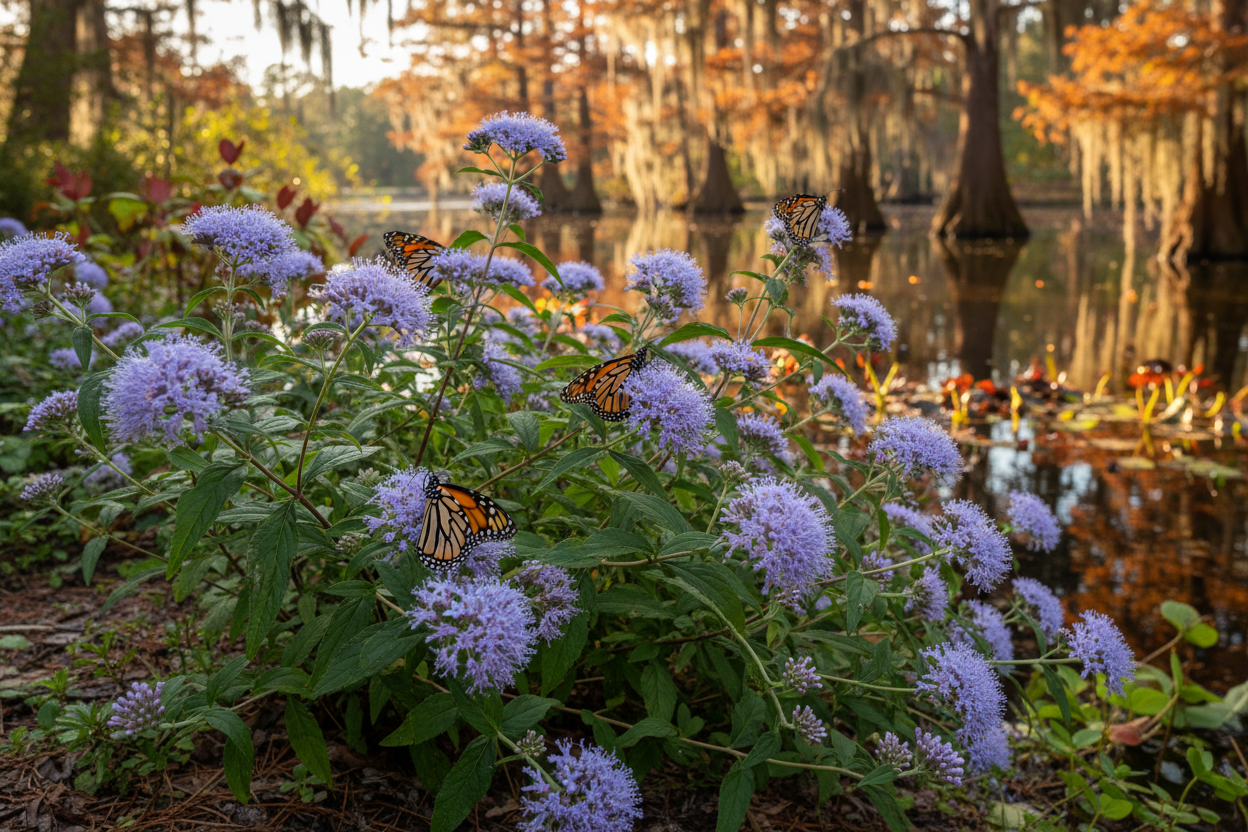
When the rest of the garden begins to fade in September and October, Blue Mistflower ignites. Its soft, fuzzy clusters of lavender-blue blooms spread across the bayou edge like a low-lying mist — hence the name — arriving precisely when migrating monarchs and swallowtails need nectar most. It is the healing garden's farewell gift to the season.
Botanical Profile
- Family: Asteraceae (Daisy family)
- Native Range: Eastern and central United States from New Jersey to Florida and west to Kansas and Texas; native to Louisiana and abundant along bayou edges, roadsides, and moist woodland margins
- USDA Hardiness Zones: 5–10
- Mature Size: 1–3 feet tall; spreads aggressively by rhizome to form colonies
- Bloom Time: August–November (one of the latest-blooming native wildflowers)
- Sun: Full sun to part shade
- Soil: Moist to average; tolerates clay, wet conditions, and periodic flooding
Traditional & Medicinal Uses
Blue Mistflower's medicinal history is modest compared to its ecological significance, but it holds a place in Southern folk traditions as a topical wash. Leaf infusions were used as a gentle astringent wash for skin irritations, rashes, and minor wounds — a use consistent with the documented antimicrobial properties of related Eupatorium species. Its primary value in the Cajun healing garden is as a closing-season ecological anchor: a plant that keeps the garden alive with pollinators deep into autumn when almost nothing else is blooming. Active constituents include flavonoids and sesquiterpene lactones common to the Asteraceae family.
Ecological Role
Blue Mistflower is one of the most important fall nectar plants in the South for migrating monarchs, painted ladies, cloudless sulphurs, and swallowtails. Its late bloom window — extending into November in Louisiana — makes it ecologically irreplaceable for insects preparing for or completing their southward migration. It spreads readily by rhizome, creating dense colonies that stabilize moist soil and provide overwintering habitat for beneficial insects.
In the Cajun Healing Garden
Part of the Jardin — The Healing Garden collection at Big Mamou Enterprises, Blue Mistflower is the garden's final bloom — a lavender farewell that sends the monarchs south and closes the healing season in beauty.