Wildlife Problem? We Can Help.
Humane, professional nuisance wildlife consulting in Southwest Louisiana.

Big Mamou Enterprises
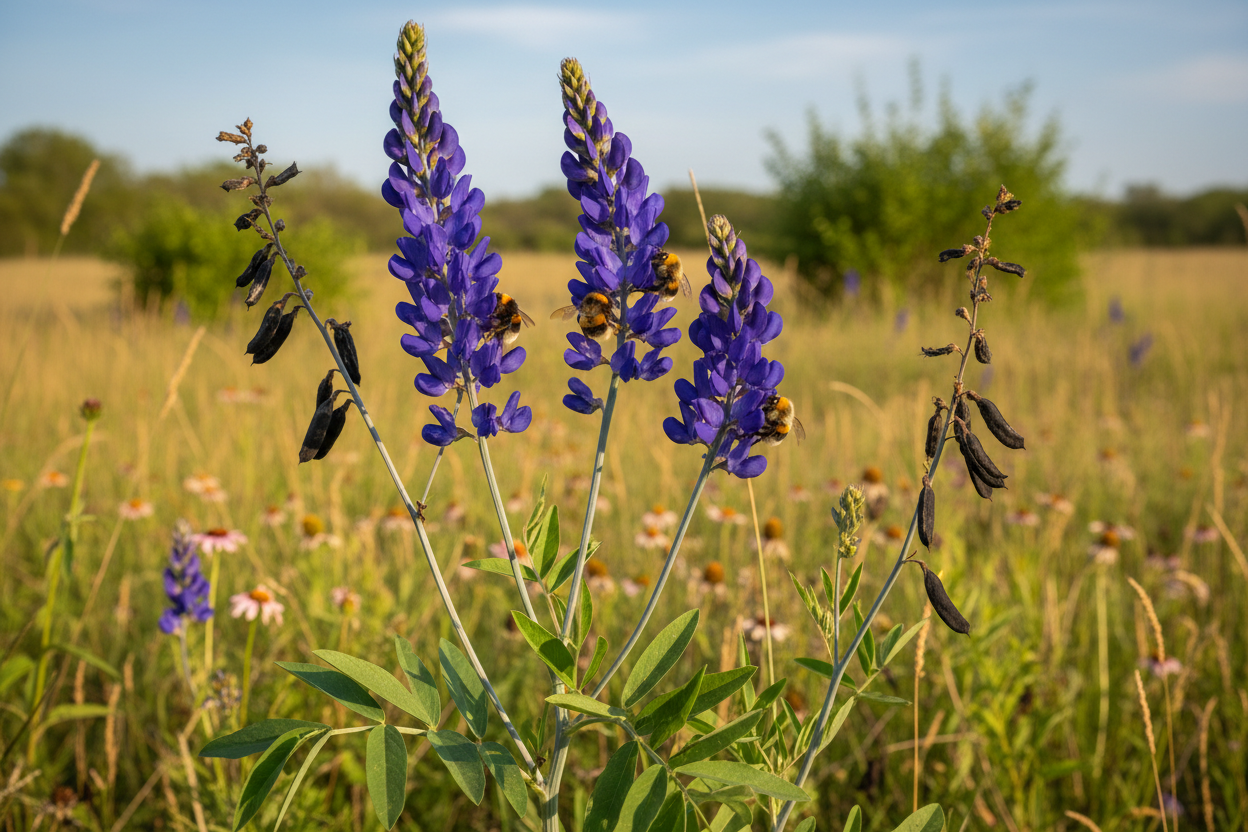
Blue False Indigo (Baptisia australis)
Blue False Indigo (Baptisia australis)
Couldn't load pickup availability
Share
Blue False Indigo (Baptisia australis)
Blue False Indigo is one of the most magnificent native wildflowers in North America — its tall, blue-green stems rising in spring to produce spectacular spikes of deep indigo-blue pea-like flowers that rival any cultivated lupine in beauty. It is a plant of extraordinary longevity and ecological depth, growing more beautiful and productive with every passing decade, its deep taproot anchoring it to the prairie soil for a century or more.
Botanical Profile
- Family: Fabaceae (Legume family)
- Native Range: Eastern and central United States from Pennsylvania to Georgia and west to Nebraska and Texas; native to Louisiana's upland prairies and open woodlands
- USDA Hardiness Zones: 3–9
- Mature Size: 3–5 feet tall and wide; long-lived perennial that improves dramatically with age
- Bloom Time: April–June; inflated black seed pods persist through winter
- Sun: Full sun to light shade
- Soil: Well-drained, dry to average; drought-tolerant; nitrogen-fixing; deep taproot
Ecological Role
Blue False Indigo is a host plant for the Wild Indigo Duskywing, Frosted Elfin, and Hoary Edge skippers — specialist butterflies that depend on Baptisia species for larval development. It is also a host for the Wild Indigo Borer Moth. Its spring flowers attract bumblebees and specialist Baptisia bees. Its nitrogen-fixing root nodules enrich the surrounding soil. The inflated black seed pods that follow the flowers rattle dramatically in the autumn wind, providing winter interest and feeding birds. A well-established Blue False Indigo can live for 50 years or more, becoming a garden landmark.
In the Living Canopy & Understory
Part of the Jardin — The Living Canopy & Understory collection at Big Mamou Enterprises, Blue False Indigo is the garden's most enduring wildflower — indigo-blue in spring, black-podded in autumn, and growing more magnificent with every year.