Wildlife Problem? We Can Help.
Humane, professional nuisance wildlife consulting in Southwest Louisiana.

Big Mamou Enterprises
Black-Eyed Susan (Rudbeckia hirta)
Black-Eyed Susan (Rudbeckia hirta)
Couldn't load pickup availability
Share
Black-Eyed Susan (Rudbeckia hirta)
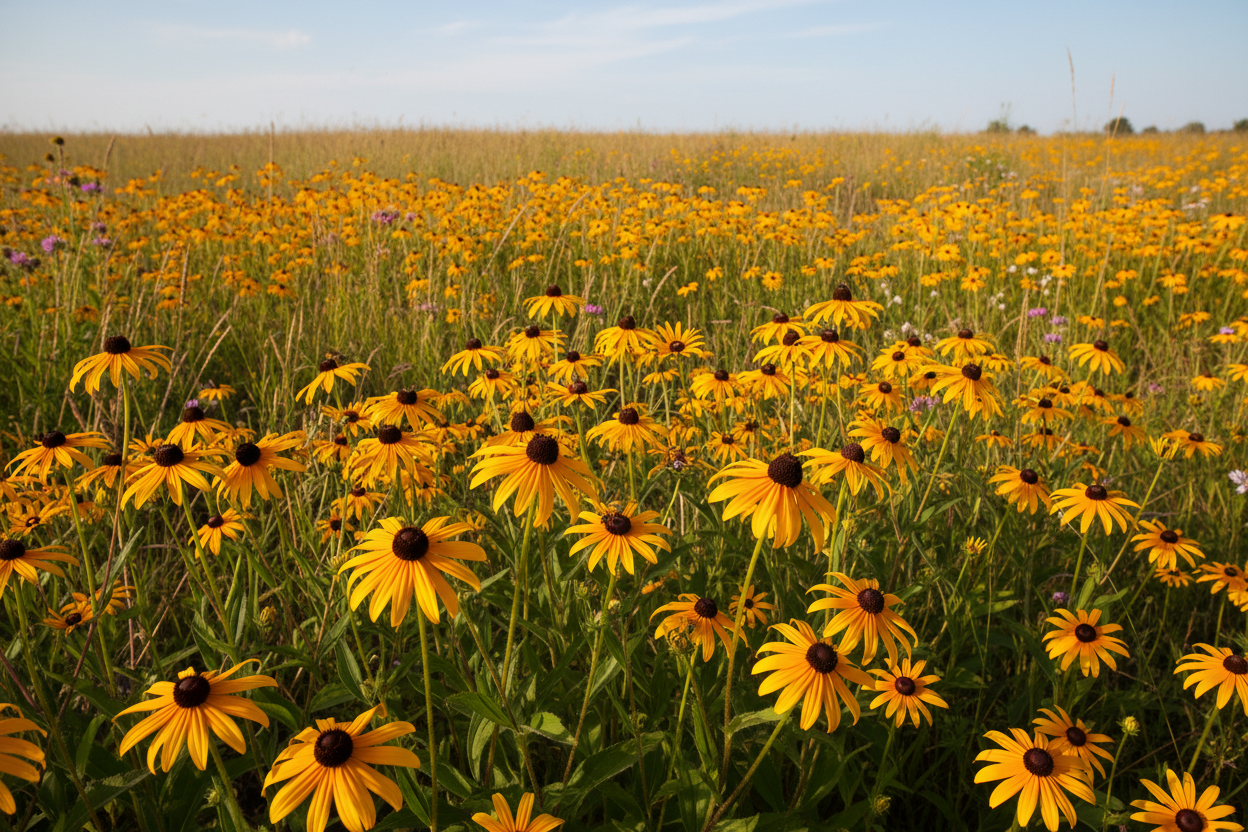
Black-Eyed Susan is America's wildflower — the bright golden daisy with the dark chocolate center that has graced roadsides, meadows, and gardens from coast to coast for as long as anyone can remember. In the Louisiana prairie, it blooms from late spring through fall, its cheerful yellow flowers rising above the grass in waves of color that define the summer prairie landscape.
Botanical Profile
- Family: Asteraceae (Daisy family)
- Native Range: Throughout North America; native to Louisiana's prairies, roadsides, and open woodlands
- USDA Hardiness Zones: 3–9
- Mature Size: 1–3 feet tall
- Bloom Time: May–October (one of the longest bloom seasons of any native wildflower)
- Sun: Full sun to light shade
- Soil: Adaptable; tolerates clay, loam, and poor soils; drought-tolerant; self-seeds freely
Prairie Movement & Ecological Role
Black-Eyed Susan is one of the most important native wildflowers for generalist pollinators — its open, accessible flowers welcoming native bees, bumblebees, butterflies, and beetles of all kinds. It is a host plant for the Silvery Checkerspot butterfly and the Wavy-lined Emerald moth. Its seeds are a critical food source for American Goldfinches, which cling to the seed heads through fall and winter. Its long bloom season — from late spring through hard frost — makes it one of the most reliable nectar sources in the prairie strip across the entire growing season.
In the Prairie Movement Strip
Part of the Prairie Movement Strip | Wind, Pollinators & Motion collection at Big Mamou Enterprises, Black-Eyed Susan is the prairie strip's most welcoming wildflower — cheerful, generous, and blooming from May to frost.