Skip to product information
1 of 1

Big Mamou Enterprises

American Elderberry – Sambucus canadensis | Cajun Folk Medicine & Heritage Shrub

American Elderberry – Sambucus canadensis | Cajun Folk Medicine & Heritage Shrub

Regular price $16.99 USD
Regular price Sale price $16.99 USD
Sale Sold out
Shipping calculated at checkout.
Quantity

Medicine, Food, and Magic in Louisiana Since Anyone Can Remember

The Elderberry has been medicine, food, and magic in Louisiana for as long as anyone can remember. Sambucus canadensis grows wild across the bayous and bottomlands of South Louisiana, and for Cajun traiteurs — the traditional folk healers of the Acadian prairie — elder was one of the foundational plants of their healing practice. Elderflower tea for fevers, elderberry syrup for winter illness, elder bark poultices for inflammation — this shrub was the Cajun family medicine cabinet long before the nearest doctor was within a day's ride. The Houma and Chitimacha nations knew it equally well, using it for many of the same purposes across centuries of parallel tradition.

In the French and Acadian settler tradition, elderberries went into wine, cordials, and preserves — a practice carried directly from Normandy and the Loire Valley to the Louisiana prairie. Elderflower fritters, dipped in batter and fried golden, were a Cajun spring delicacy. The connection between this plant and Louisiana's layered, multicultural food heritage is as deep as any plant in this garden.

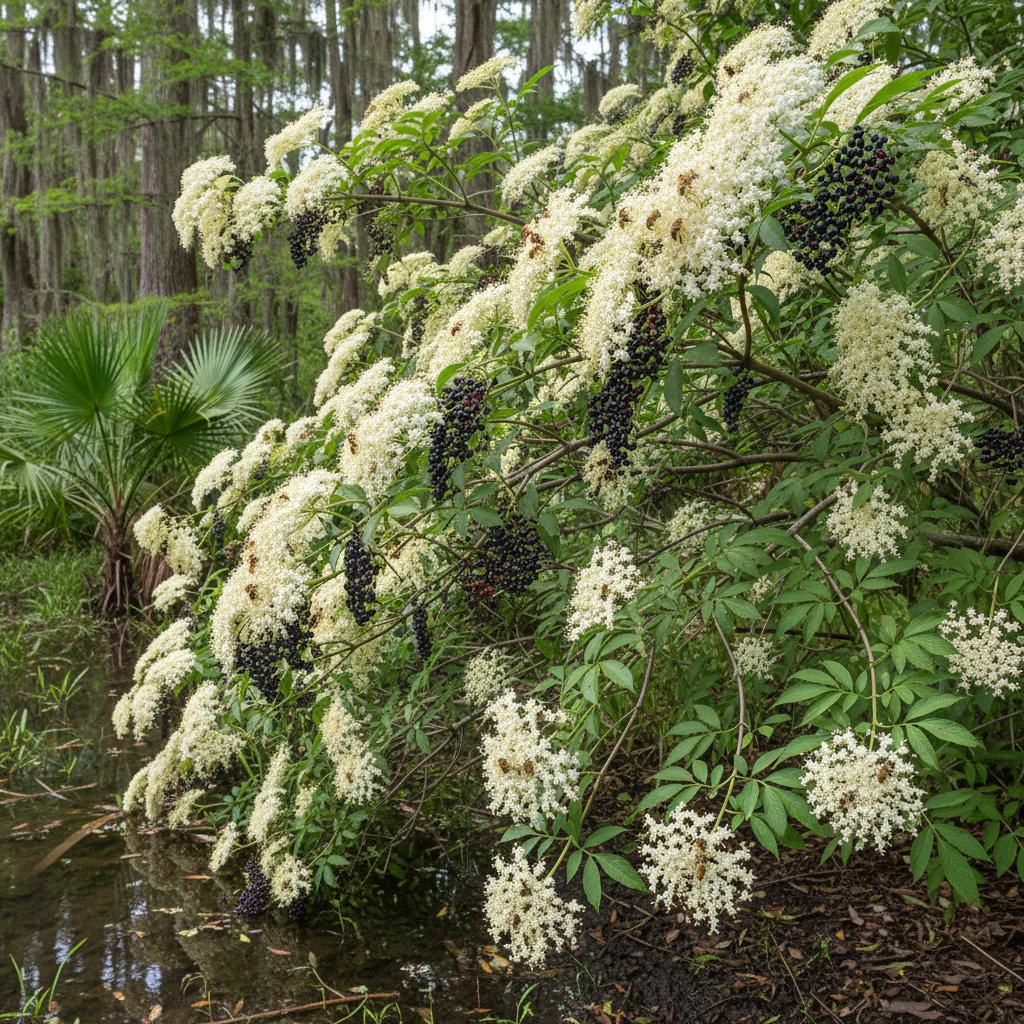
As a landscape shrub, American Elderberry is fast, generous, and beautiful. In late spring, enormous flat-topped clusters of tiny white flowers — among the most intoxicating honey-sweet fragrances of the Louisiana garden — cover the shrub for two to three weeks, drawing every pollinator in the landscape. By late summer those flowers have become heavy, drooping clusters of deep purple-black berries — brilliant wildlife food, spectacular in cordials and syrups, and striking enough to stop visitors in their tracks. It grows in sun or shade, wet or dry, rich or poor soil. It is, in every sense, a Louisiana plant.

🌿 Growing Notes (Zone 9A — Lake Charles, LA)

  • Sun: Full sun to part shade — adaptable across Louisiana's varied conditions
  • Soil: Moist, rich loam ideal; tolerates clay, wet soils, and occasional flooding
  • Water: Moderate to high; consistent moisture produces the best berry crop
  • Mature size: 6–12 ft tall and wide; spreads by root suckers into productive thickets
  • Growth rate: Fast — one of the quickest-establishing native shrubs available
  • Note: Plant two or more plants for best berry production through cross-pollination
  • Wildlife value: Flowers support 50+ bee species; berries feed over 40 bird species including migrating warblers, thrushes, and tanagers

❓ Frequently Asked Question

Are raw elderberries safe to eat straight off the shrub?
No — raw elderberries contain compounds that can cause nausea and should always be cooked before eating. Cooking neutralizes these compounds completely, which is why elderberry syrup, jelly, wine, and cordials have been safely made and consumed for centuries. The flowers are safe to eat raw and are delicious in fritters, teas, and lemonade.

⚠️ Disclaimer: Plant descriptions are for horticultural and educational purposes only. Consult a qualified herbalist or healthcare provider before any medicinal use. Raw elderberries should always be cooked before consumption.

View full details