Skip to product information
1 of 1

Big Mamou Enterprises

American Beautyberry – Callicarpa americana | Native Louisiana Jewel Shrub

American Beautyberry – Callicarpa americana | Native Louisiana Jewel Shrub

Regular price $18.00 USD
Regular price Sale price $18.00 USD
Sale Sold out
Shipping calculated at checkout.
Pot size
Quantity

If You Grow Only One Native Shrub in Louisiana, Grow This One

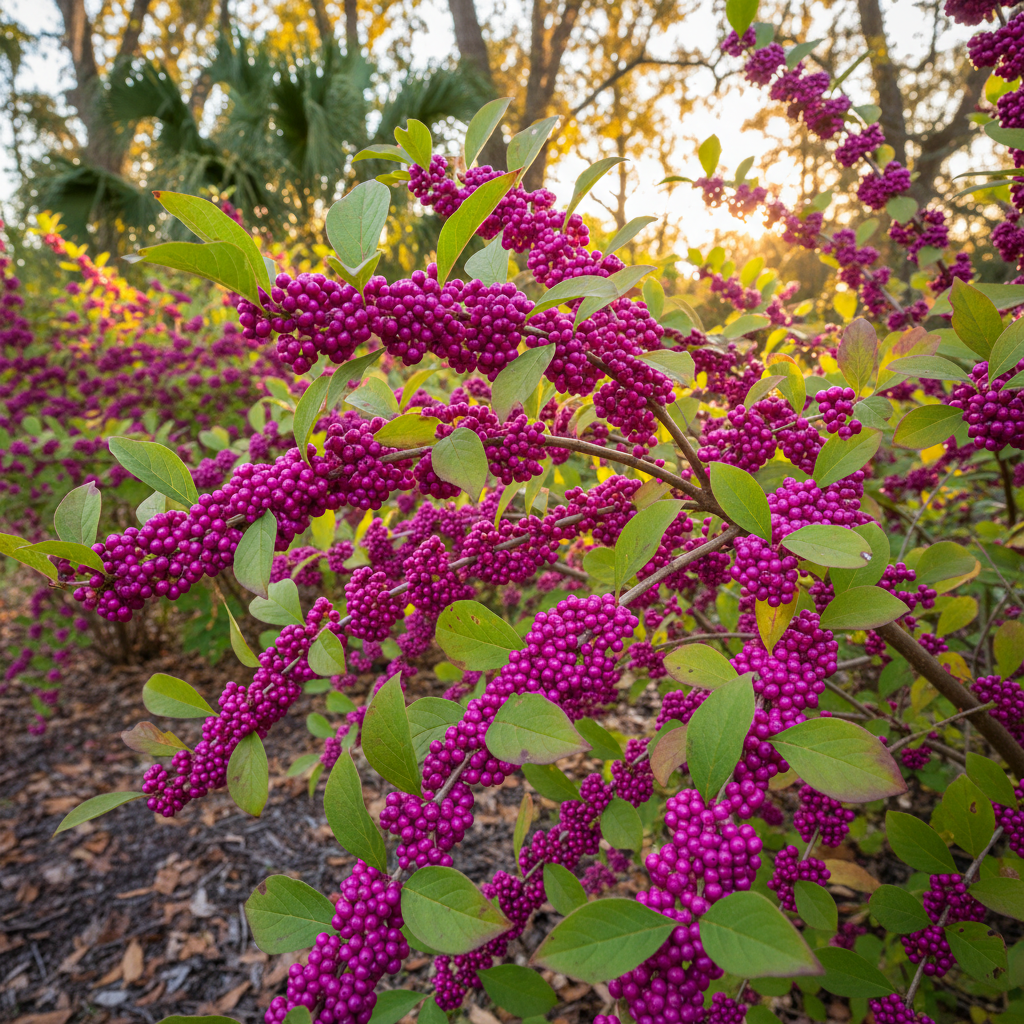
Callicarpa americana is the showstopper of the fall native garden — a loose, arching shrub that spends spring and summer in quiet, graceful green anonymity, then explodes in September and October into one of the most spectacular color displays in the entire plant kingdom. The berries — clustered in dense, jewel-like whorls tightly hugging every stem from base to tip — are an almost supernatural shade of electric magenta-violet, a color so vivid and unexpected it stops people in their tracks every single time. Nothing else looks like it. Nothing.

American Beautyberry is as deeply rooted in Louisiana's Indigenous and folk heritage as any plant in this garden. The Choctaw, Houma, and Chitimacha peoples used the roots, leaves, and branches in treatments for rheumatism, fever, and skin ailments. Perhaps most famously, the crushed leaves were rubbed on skin and tucked into the hatbands and collars of horses and workers as a mosquito and deer fly repellent — a use now confirmed by University of Mississippi research that identified the active compound callicarpenal as a legitimate, DEET-comparable insect deterrent. In South Louisiana, where mosquitoes are not a nuisance but an institution, this is not a trivial thing.

Cajun and Creole folk healers kept it in their healing gardens for its versatility, and generations of Louisiana hunters knew to look for Beautyberry thickets in fall — deer, wild turkey, fox, raccoon, and over 40 species of songbirds descend on the berries the moment they ripen, making it one of the single most productive wildlife shrubs in the entire Southeast. Plant it at a woodland edge, under a live oak canopy, along a fence row, or in any part-shade corner of the garden that needs fall glory. It will not disappoint.

🌿 Growing Notes (Zone 9A — Lake Charles, LA)

  • Sun: Part shade to full sun — most spectacular berry color in part shade
  • Soil: Well-drained to average; tolerates clay, loam, and sandy soils
  • Water: Moderate; drought-tolerant once established; handles Louisiana's feast-or-famine rainfall
  • Mature size: 4–8 ft tall and wide; gracefully arching habit
  • Growth rate: Fast — cut back hard in late winter for the most vigorous berry-producing new growth
  • Zone 9A tip: Hard pruning to 12 inches each February produces the longest, most berry-laden stems by fall
  • Wildlife value: Berries feed 40+ bird species; deer, fox, raccoon, and opossum; critical fall wildlife food source

❓ Frequently Asked Question

Do Beautyberry leaves really work as a mosquito repellent?
Yes — University of Mississippi researchers confirmed that crushed Beautyberry leaves contain callicarpenal, a compound with mosquito-repelling properties comparable to DEET. Cajun and Creole folk healers and hunters used crushed leaves rubbed on skin and tucked into hatbands for exactly this purpose for generations. It won't replace a commercial repellent for serious exposure, but it works — and it's been growing in your backyard all along.

⚠️ Disclaimer: Plant descriptions are for horticultural and educational purposes only. Consult a qualified herbalist or healthcare provider before any medicinal use.

View full details