Wildlife Problem? We Can Help.
Humane, professional nuisance wildlife consulting in Southwest Louisiana.


Big Mamou Enterprises
Yarrow (Achillea millefolium)
Yarrow (Achillea millefolium)
Couldn't load pickup availability
Share
Yarrow (Achillea millefolium)
Yarrow is one of the oldest medicinal plants in human history — its name traces back to the Greek hero Achilles, who legend says used it to staunch the wounds of his soldiers on the battlefield. In Louisiana's Cajun and Indigenous healing traditions, traiteurs knew it simply as a plant of protection: reliable, powerful, and always within reach.
Botanical Profile
- Family: Asteraceae (Daisy family)
- Native Range: North America, Europe, and Asia; naturalized throughout the United States including Louisiana
- USDA Hardiness Zones: 3–9
- Mature Size: 1–3 feet tall
- Bloom Time: June–September
- Sun: Full sun
- Soil: Well-drained; tolerates poor, dry soils; drought-tolerant once established
Traditional & Medicinal Uses
Yarrow's medicinal applications span cultures and centuries. Its primary traditional uses include: stopping bleeding (hemostatic) when applied as a fresh poultice to wounds; breaking fevers by inducing perspiration; relieving menstrual cramps and regulating cycles; and as an anti-inflammatory tea for colds and respiratory infections. The active compounds include achillin, achillicin, flavonoids, and volatile oils including camphor and borneol. Cajun traiteurs used yarrow as a protective herb — both physically and spiritually — in their healing practice.
Ecological Role
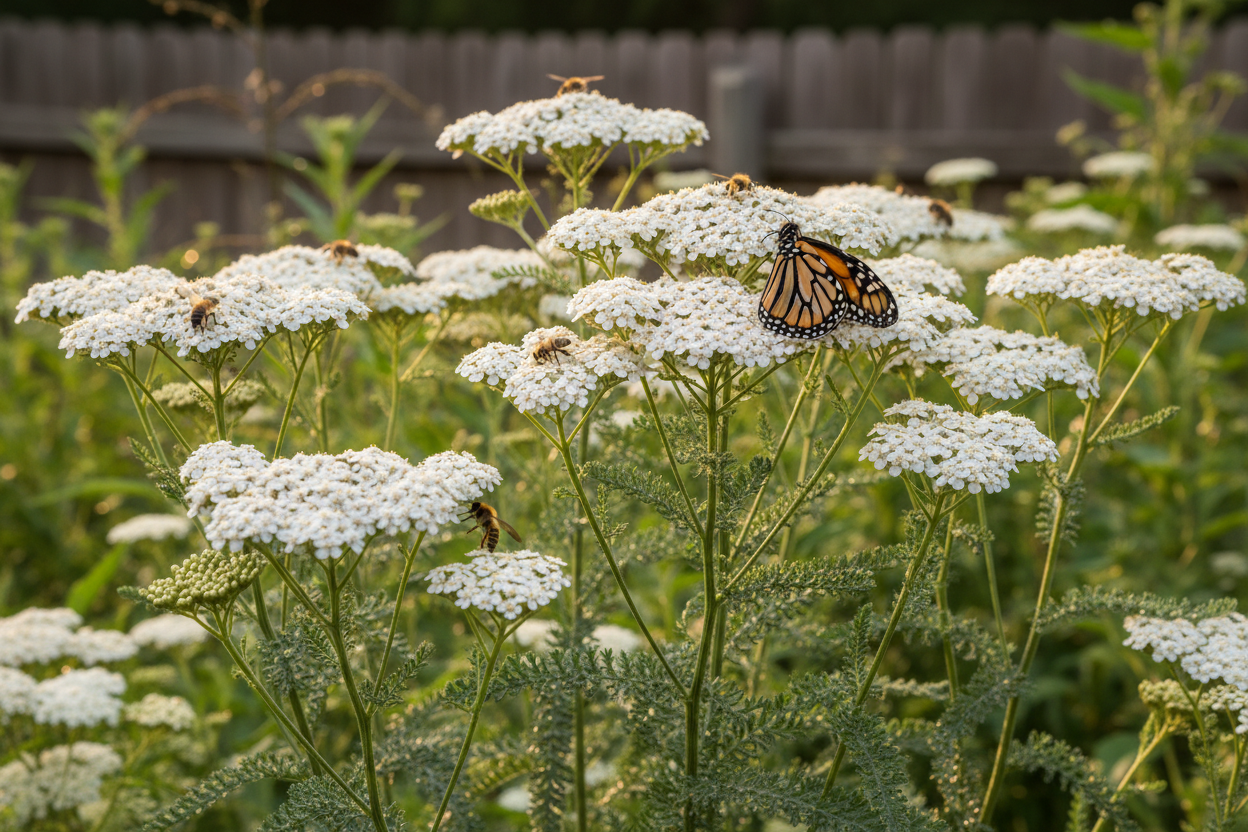
Yarrow is a premier pollinator plant, attracting over 100 species of insects including native bees, wasps, beetles, and butterflies. Its flat-topped flower clusters serve as landing pads for small pollinators. It also acts as a dynamic accumulator, drawing up minerals from deep in the soil and making them available to neighboring plants.
In the Cajun Healing Garden
Grown as part of the Jardin — The Healing Garden collection at Big Mamou Enterprises, Yarrow honors the living legacy of Louisiana's traiteur tradition — where plants were medicine, and medicine was culture.