Wildlife Problem? We Can Help.
Humane, professional nuisance wildlife consulting in Southwest Louisiana.

Big Mamou Enterprises
Sweetleaf (Symplocos tinctoria)
Sweetleaf (Symplocos tinctoria)
Couldn't load pickup availability
Share
Sweetleaf (Symplocos tinctoria)
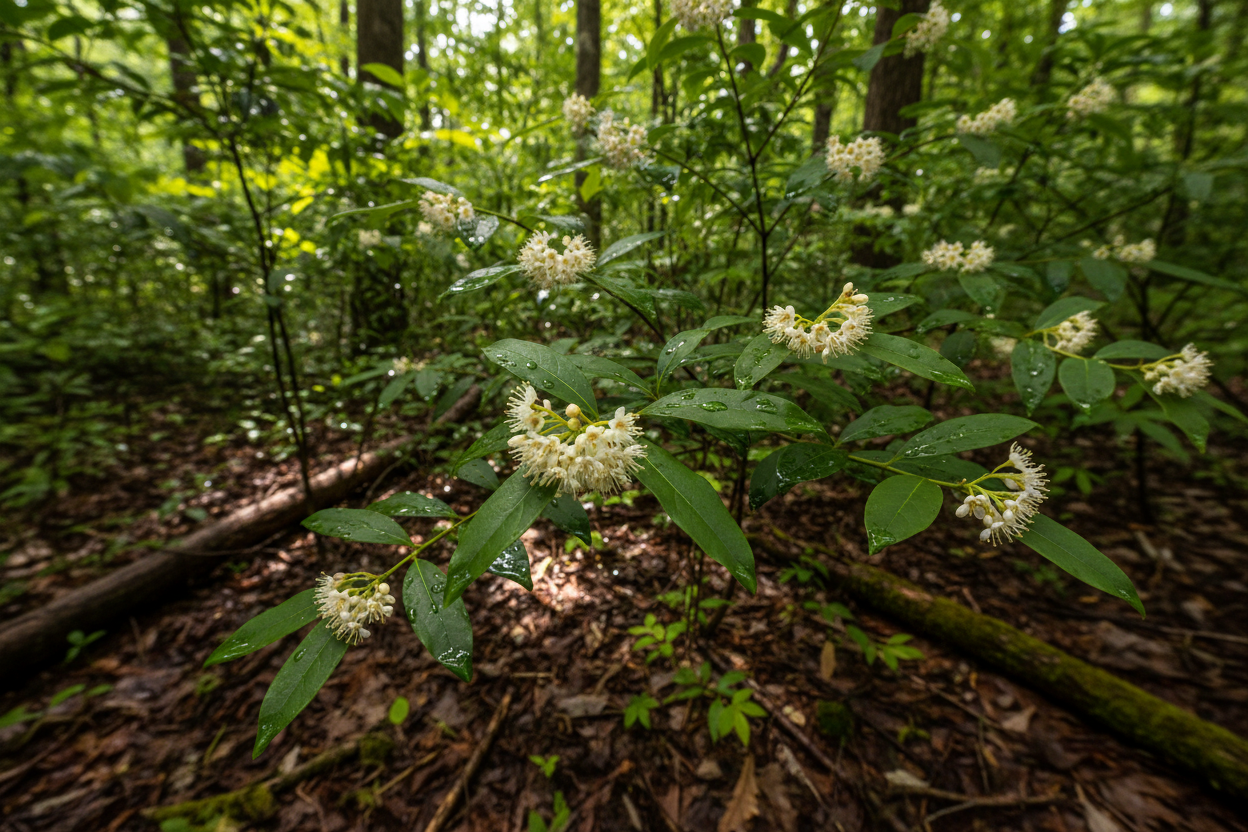
Sweetleaf is one of the South's best-kept botanical secrets. Pick a leaf, chew it gently, and you'll taste something unexpected — a mild, clean sweetness, like a whisper of honey from the forest. It is the only native North American member of its genus, a botanical rarity that has quietly graced the understories of Southern woodlands for millennia, known to those who knew where to look.
Botanical Profile
- Family: Symplocaceae (Sweetleaf family — the only family in its order)
- Native Range: Southeastern United States, from Delaware to Florida and west to Louisiana and Arkansas; found in moist woodland understories and stream banks
- USDA Hardiness Zones: 6–9
- Mature Size: 8–15 feet tall (large shrub to small tree)
- Bloom Time: February–April (one of the earliest native bloomers)
- Sun: Part shade to full shade
- Soil: Moist, acidic, well-drained; thrives in woodland garden settings
Traditional & Medicinal Uses
Sweetleaf's primary historical role was as a natural dye plant — its leaves and bark yield a rich yellow dye used by Indigenous peoples and early Creole settlers to color wool, cotton, and basketry. As a medicinal plant, it was used as a gentle tonic and febrifuge, and its sweet leaves were chewed as a mild digestive aid. It is semi-evergreen, holding its leaves through mild Southern winters, which made it a reliable year-round resource. Its early spring bloom — clusters of fragrant creamy-white flowers appearing before the leaves fully emerge — made it a critical early nectar source for native bees emerging from winter dormancy.
Ecological Role
Sweetleaf is a specialist host plant for the Henry's Elfin butterfly (Callophrys henrici), one of the earliest spring butterflies in the Southeast, whose caterpillars feed exclusively on Sweetleaf flowers and developing fruit. It is also an important early nectar source for native bees and a food plant for white-tailed deer. Its rarity in cultivation makes it a conservation priority in native plant gardens.
In the Cajun Healing Garden
Part of the Jardin — The Healing Garden collection at Big Mamou Enterprises, Sweetleaf is a living piece of Louisiana's botanical heritage — rare, sweet, and quietly extraordinary.