Wildlife Problem? We Can Help.
Humane, professional nuisance wildlife consulting in Southwest Louisiana.

Big Mamou Enterprises
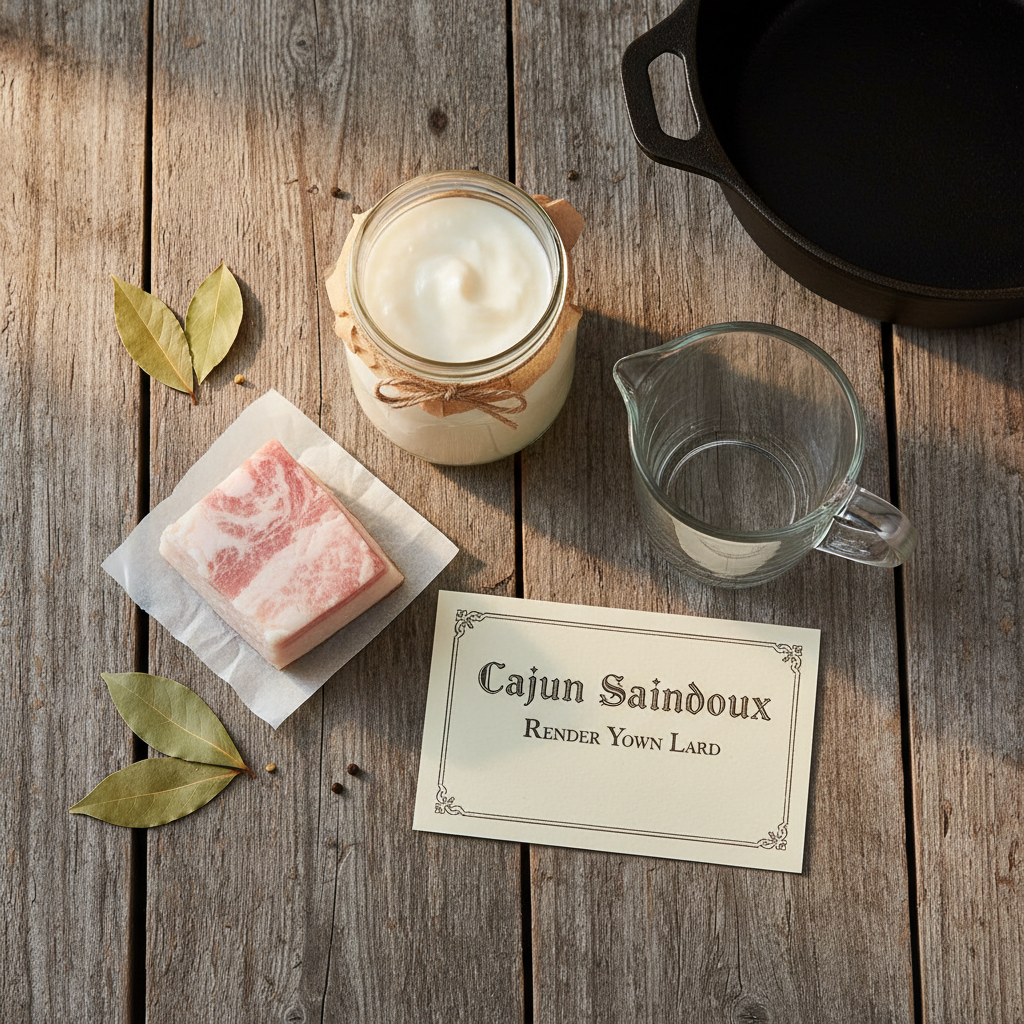
Lard Rendering Starter Kit — Learn the Art of Saindoux
Lard Rendering Starter Kit — Learn the Art of Saindoux
Couldn't load pickup availability
Share
Cook the Way Cajun Grandmothers Cooked
Before vegetable shortening arrived on the grocery shelf, every Cajun kitchen ran on saindoux — pure rendered pork lard, golden and fragrant, rendered from fatback at the boucherie and stored in crocks for the months ahead. It fried the grattons. It made the roux. It cooked the couche-couche. It preserved the confit. It was the fat that built Cajun cuisine, and it has never been replaced — only forgotten.
The Lard Rendering Starter Kit brings it back. Everything you need to render your first batch of saindoux at home, step by step, the wet-method way — the same way it was done at every boucherie from Mamou to Ville Platte.
What’s in the Kit
- Pure rendered lard — a starter supply of properly rendered saindoux for your first cook
- Fat separator — for straining rendered lard clean from the solids
- Step-by-step wet-method rendering instructions: fatback prep, stovetop rendering, straining, and storage
- Lard storage guide: how to store saindoux safely for months in an airtight container
- Confit primer: how to use rendered lard as a fat-preservation medium for duck, pork, and gizzards
Frequently Asked Questions
- What is saindoux and why did Cajun cooks use it?
- Saindoux is pure rendered pork lard — the primary cooking fat of Cajun Louisiana before vegetable shortening. It has a higher smoke point than butter, a richer flavor than vegetable oil, and doubles as a fat-preservation medium for confit. Cajun grandmothers used it for everything: roux, frying, baking, and preserving.
- What is the wet rendering method?
- The wet method adds a small amount of water to the fatback before rendering. The water prevents scorching at the start, evaporates as the fat renders, and produces a cleaner, whiter lard than dry rendering. It is the traditional Cajun boucherie method.
- What do I need to render lard at home?
- You need fatback (from a butcher or grocery store), a heavy pot (cast iron or enameled), a fine mesh strainer, and clean glass jars for storage. The kit includes the fat separator and all instructions.
- How long does rendered lard keep?
- Properly rendered and strained saindoux keeps refrigerated for 6 months or frozen for up to a year. At room temperature in an airtight container, it keeps 1–2 months in a cool pantry.
- What is confit and how does lard preserve food?
- Confit is a preservation method where food (duck legs, pork, gizzards) is cooked slowly in fat and then stored submerged in that fat. The fat excludes oxygen, preventing spoilage. The confit primer in this kit covers the full process.
- Is lard healthier than vegetable shortening?
- Lard contains less trans fat than hydrogenated vegetable shortening and has a better ratio of monounsaturated fats. It is a minimally processed, single-ingredient fat with a long history of safe use in traditional cuisines worldwide.
The Wet Rendering Method
Cut fatback into 1-inch cubes. Place in a heavy pot with ½ cup cold water. Cook over medium-low heat, stirring occasionally, until the fat renders clear and the grattons rise golden to the surface. Strain hot through fine mesh into a clean glass jar. Allow to cool. When solid, it should be pure white — the sign of properly rendered saindoux. That’s it. That’s the whole tradition.
What Saindoux Can Do That Shortening Cannot
- Higher smoke point for deep frying grattons and frying chicken
- Richer, more complex flavor in dark roux and pie crusts
- Natural fat medium for confit — submerging preserved food in fat to exclude oxygen and prevent spoilage
- Shelf-stable for months when rendered properly and stored airtight
From the La Conservation Curriculum
This kit is the hands-on material for Lesson 3: Rendering & Confit in the La Conservation Cadiénne curriculum — where students render a live batch of lard on the stovetop, compare it to commercial shortening, and learn why fat preservation works by excluding oxygen from the food it surrounds.
Préparé avec intention en Louisiane — Big Mamou Enterprises / CajunInABox.