Wildlife Problem? We Can Help.
Humane, professional nuisance wildlife consulting in Southwest Louisiana.
Big Mamou Enterprises
Holy Basil — Basilic Sacré (Ocimum tenuiflorum) | Traiteur Adaptogen & Sacred Herb
Couldn't load pickup availability
Share
Basilic Sacré. The herb that holds you steady when everything is moving.
Holy Basil — known as Tulsi in Ayurvedic tradition — found its way into Louisiana's Cajun and Creole healing gardens through the same currents of trade, migration, and cultural exchange that shaped the entire Gulf Coast. In the Traiteur tradition, it was the herb of resilience — given to those who were overwhelmed, depleted, or struggling to find their footing. It was the herb that said: you can handle this.
Holy Basil is one of the most well-researched adaptogens in the world. Its eugenol, rosmarinic acid, and ursolic acid work together to modulate the stress response, reduce cortisol, support immune function, and protect the body from oxidative damage. It's anti-inflammatory, antimicrobial, and mildly anxiolytic. As a daily tea, it builds resilience over time — the kind of deep, systemic strength that comes from consistent, gentle support.
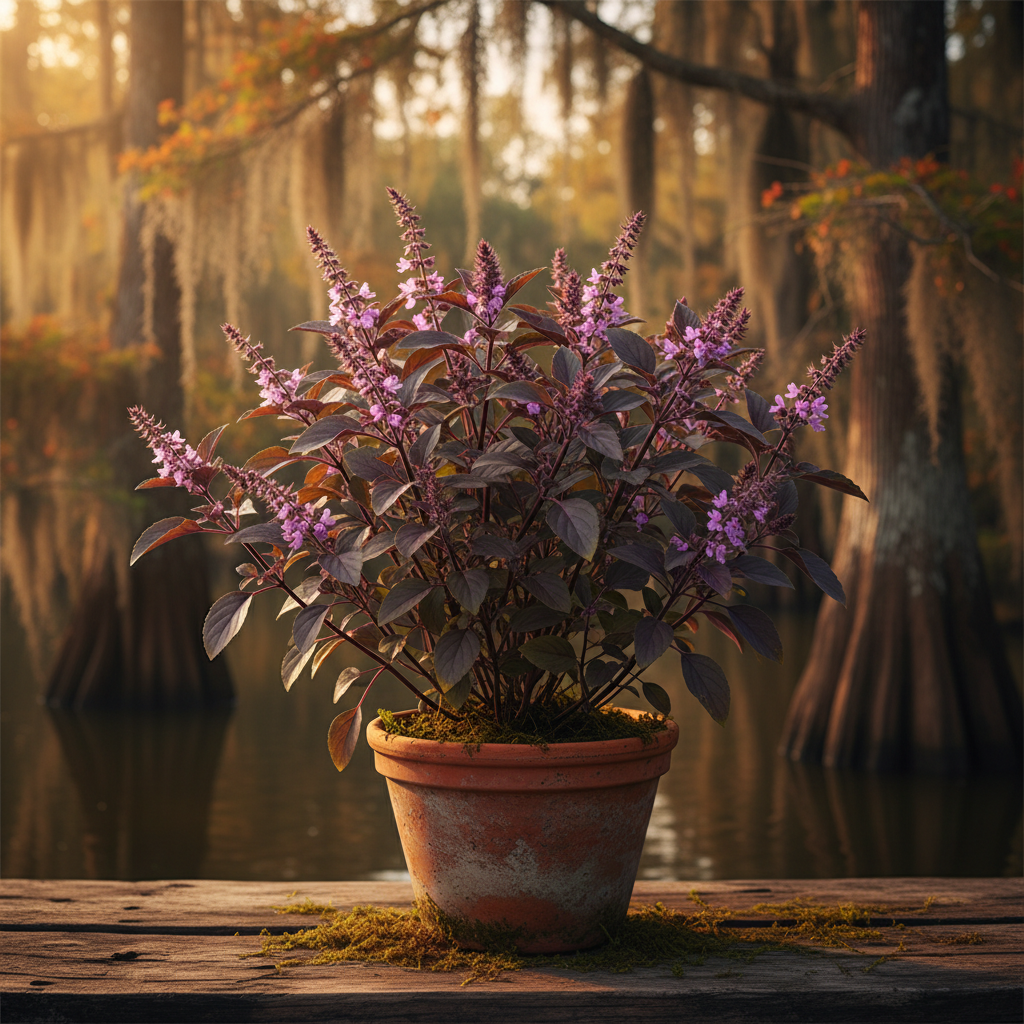
In Louisiana's climate, Holy Basil thrives. It loves the heat, grows quickly, blooms prolifically in purple and white, and fills the garden with a complex, clove-like fragrance that is both grounding and uplifting. It's an annual that self-seeds readily and returns year after year once established.
- Annual herb; self-seeds readily in Louisiana's warm climate
- Full sun; loves heat and humidity
- Adaptogen, anti-inflammatory, antimicrobial, and anxiolytic
- Leaves, flowers, and seeds all medicinal and culinary
- Attracts bees and beneficial pollinators
Plant Details
- Botanical name: Ocimum tenuiflorum
- Common names: Holy Basil, Tulsi, Basilic Sacré
- Cajun name: Basilic Sacré
- Family: Lamiaceae
- Type: Annual (self-seeds readily in warm climates)
- Sun: Full sun
- Water: Moderate; drought-tolerant once established
- Climate: Thrives in heat and humidity; ideal for Louisiana and Gulf South gardens
- Origin: Native to the Indian subcontinent; naturalized in Louisiana Cajun and Creole healing gardens through Gulf Coast trade routes
Common Questions
What is Holy Basil (Tulsi) used for in Cajun tradition?
In the Cajun Traiteur tradition, Holy Basil — Basilic Sacré — was the herb of resilience. It was given to those who were overwhelmed or depleted, used as a daily tea to build systemic strength over time. It arrived in Louisiana's healing gardens through Gulf Coast trade and cultural exchange, blending Ayurvedic and Creole herbal traditions.
What is an adaptogen and how does Holy Basil work?
Adaptogens are herbs that help the body adapt to physical and emotional stress. Holy Basil contains eugenol, rosmarinic acid, and ursolic acid, which work together to modulate the stress response, reduce cortisol levels, support immune function, and protect against oxidative damage.
Can Holy Basil grow in Louisiana's climate?
Yes — Holy Basil is exceptionally well-suited to Louisiana's heat and humidity. It grows vigorously in full sun, self-seeds readily, and thrives as a warm-season annual throughout the Gulf South.
Is Holy Basil the same as regular basil?
No. Holy Basil (Ocimum tenuiflorum) is a distinct species from culinary sweet basil (Ocimum basilicum). It has a more complex, clove-like fragrance and is primarily valued for its medicinal and adaptogenic properties, though it is also edible.
What size plant will I receive?
Holy Basil is available in three sizes: Small (4" pot), Medium (1-gallon pot), and Large (3-gallon pot). All plants are shipped as healthy, rooted specimens ready to transplant.
⚠️ Disclaimer: This plant is sold as a living heritage and garden plant. Traditional uses are shared for cultural and educational purposes only. This product is not intended to diagnose, treat, cure, or prevent any disease. Consult a qualified healthcare provider before using any plant medicinally.